Live labs
Isolated ranges for each learner


 fivefour, powered by Markon"
width="197"
height="52"
loading="lazy"
decoding="async"
>
Markon is a national security mission integrator based in Falls Church, Virginia. On its own site, Markon describes a team of more than 950 people working across cyber operations and intelligence. k>fivefour is Markon's cyber training offer. Markon publishes it as operator-built red team, blue team, and full-spectrum training, and it publishes a rule that is easy to say and hard to build software for: a certificate requires a live hands-on assessment.
Markon also publishes the scale of that program: more than 6 courses plus scenario content, more than 40 hands-on labs, more than 1,300 students trained, and 7 roles in the DoD Cyber Workforce Framework. Those are Markon's published figures for the training program.
k>fivefour came into Markon with Millennium. The standard came with it. Readiness is what an operator can do under realistic conditions. A packaged learning system can host videos and score a quiz. It does not give each learner an isolated lab, keep a record when a range fails during a class, or connect a credential to a workforce qualification. That is the gap Battlegrounds is being built to close.
Battlegrounds is the custom learning platform Active Logic is building with Markon, as an ongoing Team as a Service partnership. k>fivefour is the training offer sponsors and learners see. Battlegrounds is the software underneath it: catalog, content operations, live ranges, hands-on exams, credentials, qualification tracking, and a learning record. The work is more than a year in, with more development planned over the next year and the foreseeable future. This is a platform still in motion.
The cost of the wrong tool shows up in the credential. A certificate that was never backed by a lab tells a sponsor that someone is ready. A range that cannot be stood up for a class tells the instructor that the day is lost. A qualification standard that lives in a separate tracker tells the program that it cannot see who is actually qualified. Instructors lose hours to unscored lab work, and when a range fails mid-session nobody can reconstruct what the software did.
Markon describes the training in modes a content player cannot imitate: instructor-led pipelines, asynchronous ranges in the browser with an isolated environment for each student, and exercises that can be generated against an automated adversary. Battlegrounds is the system those modes have to run on. When the lab layer is missing, the certificate can only speak to attendance.
Packaged learning software is built to deliver content and record attendance. Cyber operator training has a harder job. The comparison below is the product decision, in plain language.
| Packaged LMS | Battlegrounds |
|---|---|
| A quiz unlocks a certificate. | A hands-on lab comes before a certificate, and that certificate can be revoked. |
| Labs are videos, or a sandbox someone builds by hand for the class. | A lab template provisions an isolated environment, and one template can serve many courses. |
| A failed range is explained from memory after the class. | Provisioning and callbacks are written to a lab audit log. |
| Completion is a checkbox on a course. | A job qualification record moves a skill from exercised, to qualified, to approved. |
| Instructors collect lab files from an inbox. | Lab submissions sit in a grading queue that shows how long each one has waited. |
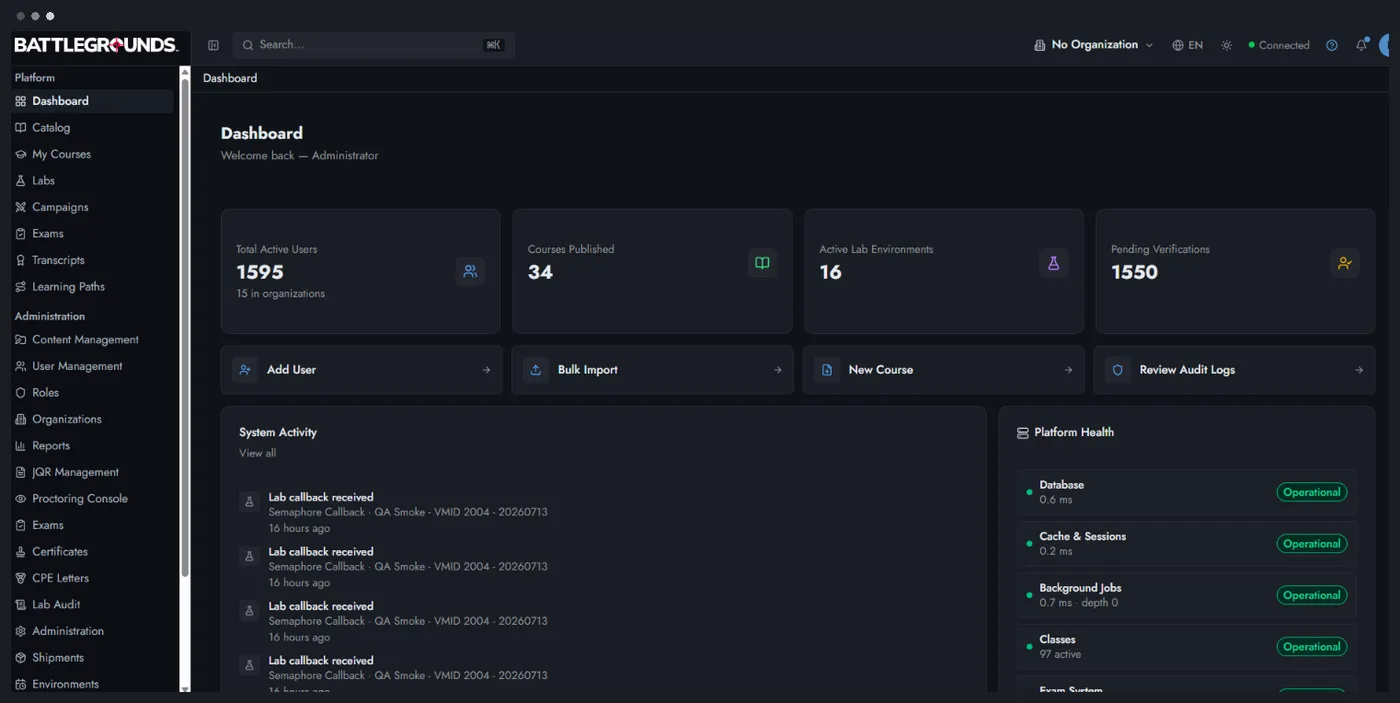
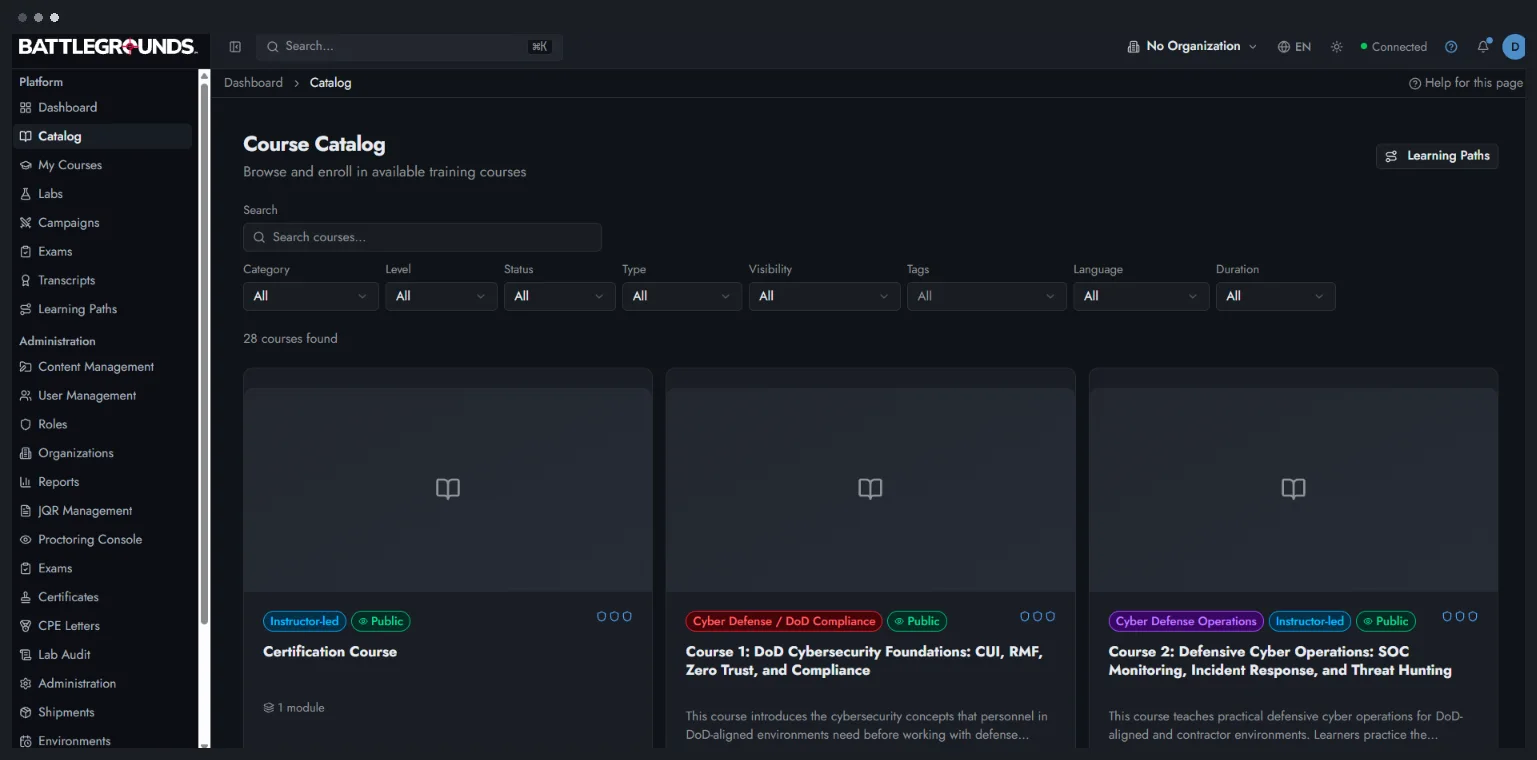
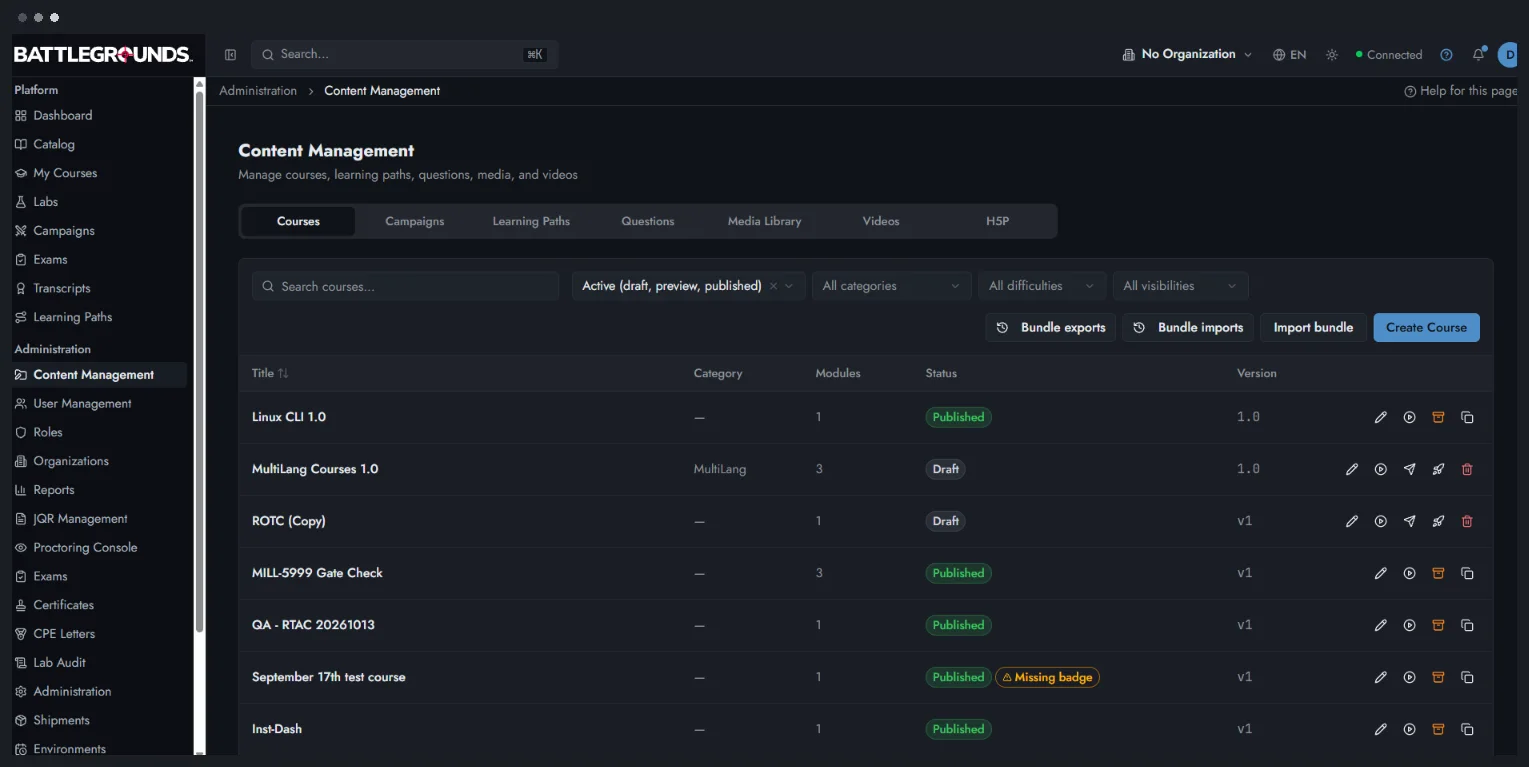
The depth is easier to show than to summarize. The command center above is where a program lead starts the day. The pairs below are how catalog, labs, assessment, credentials, and evidence actually move. The line under each screen is the job it does for someone who has to stand behind a credential.
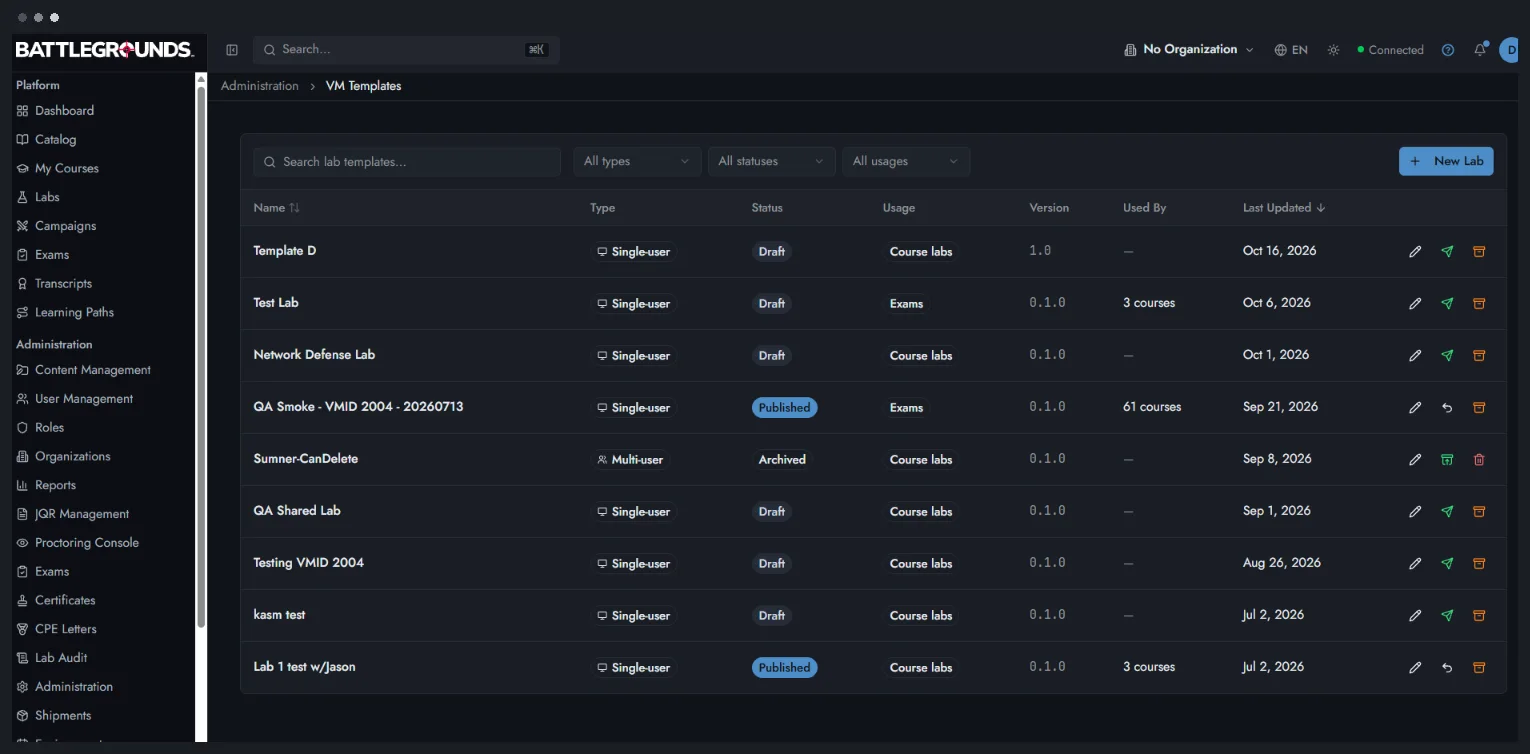
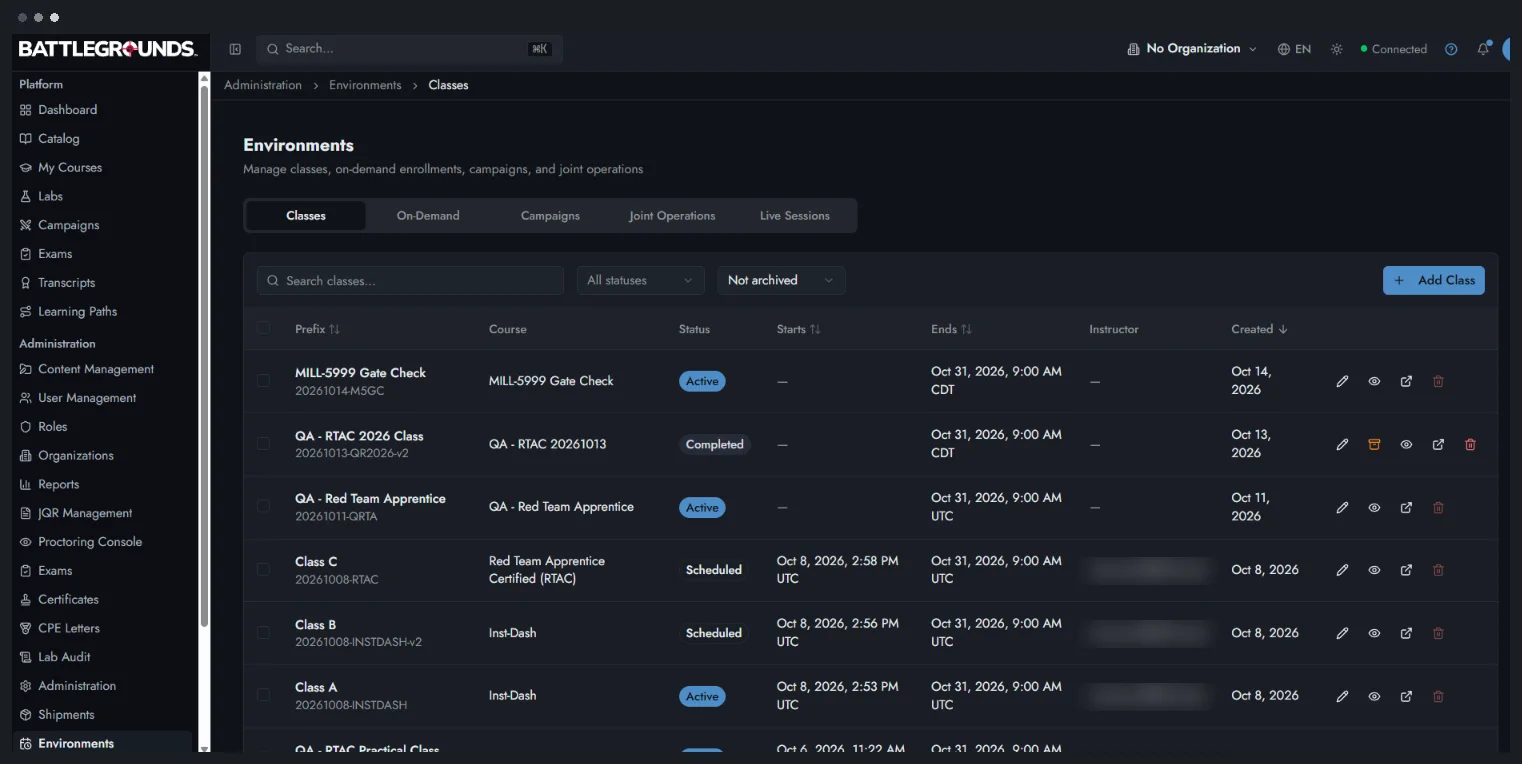
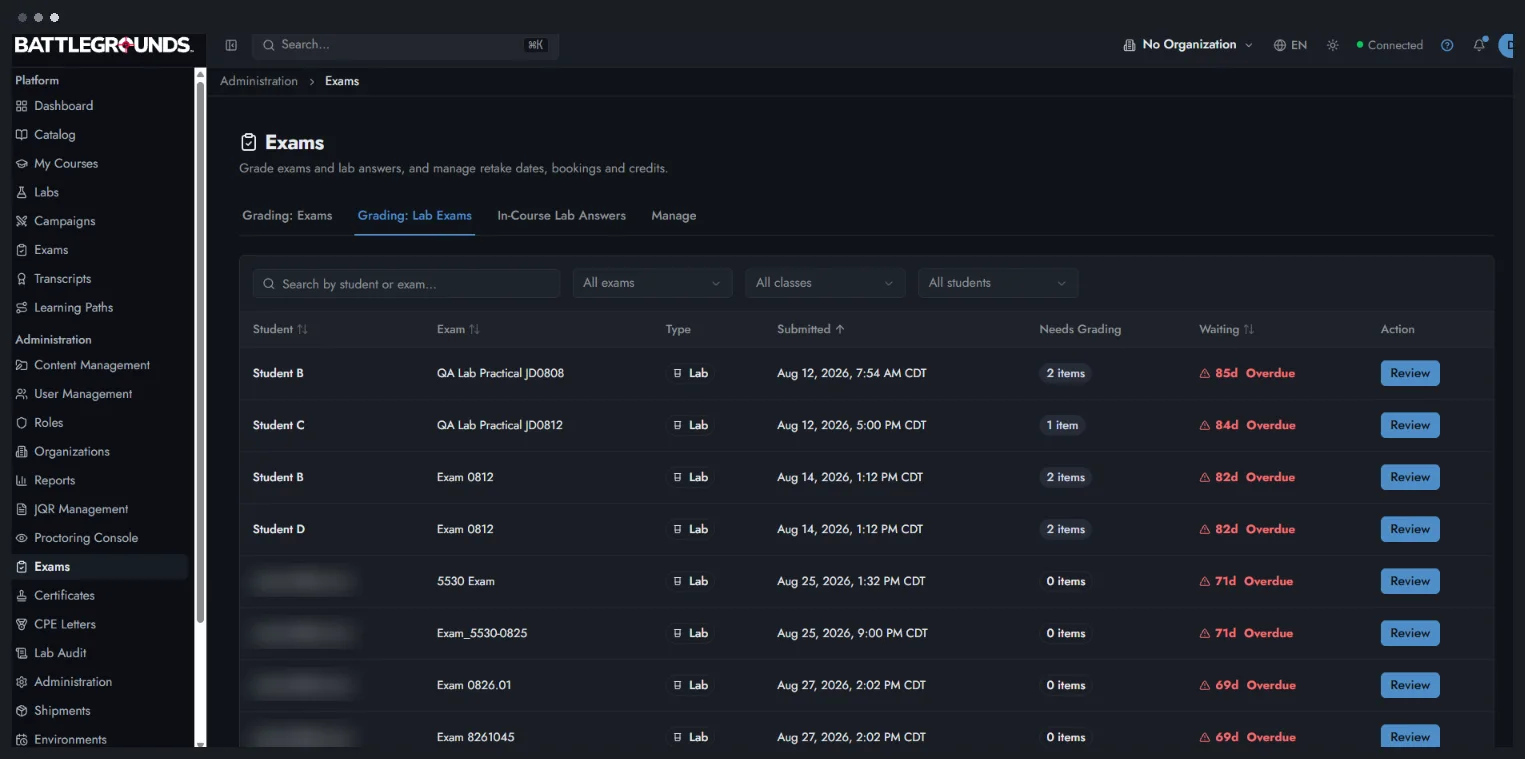
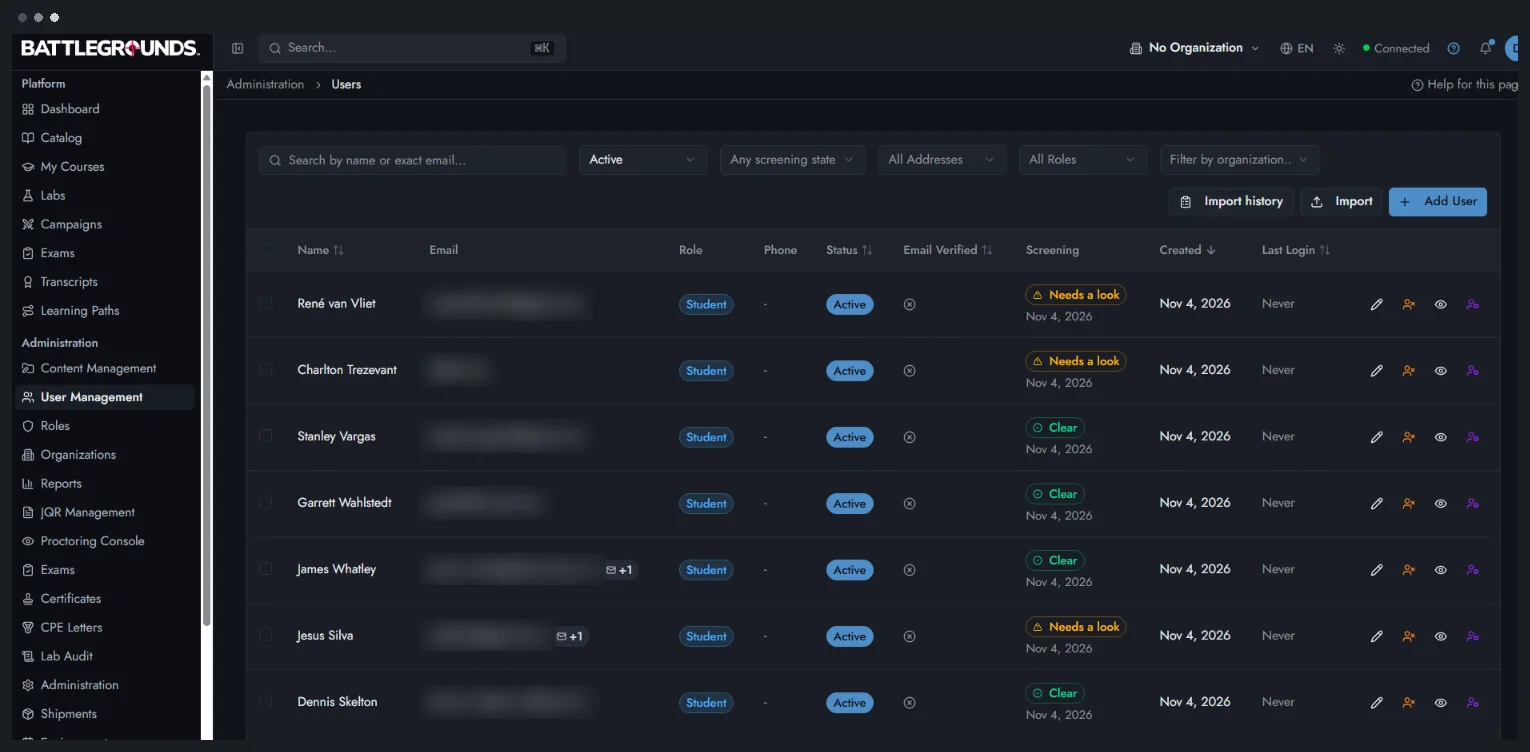
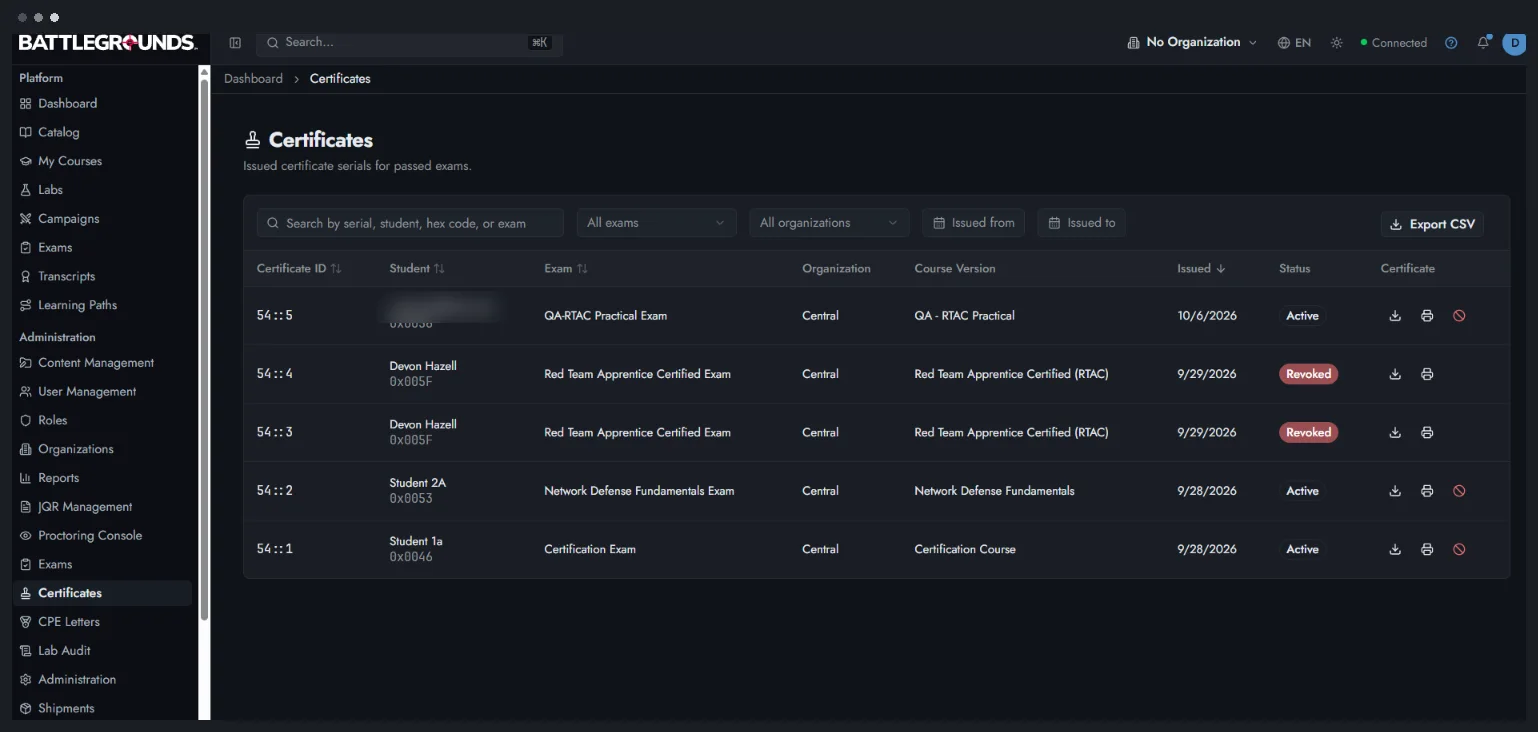
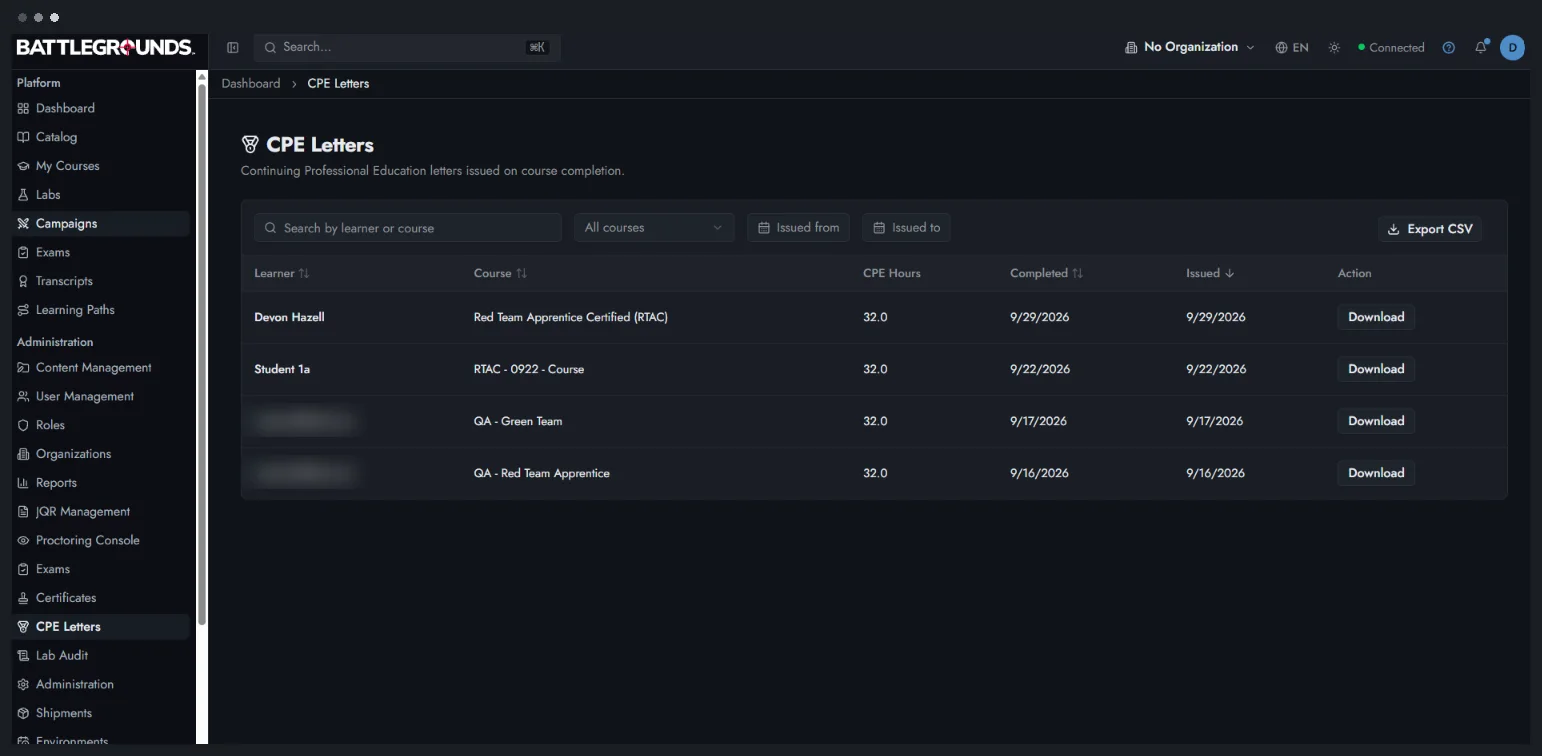
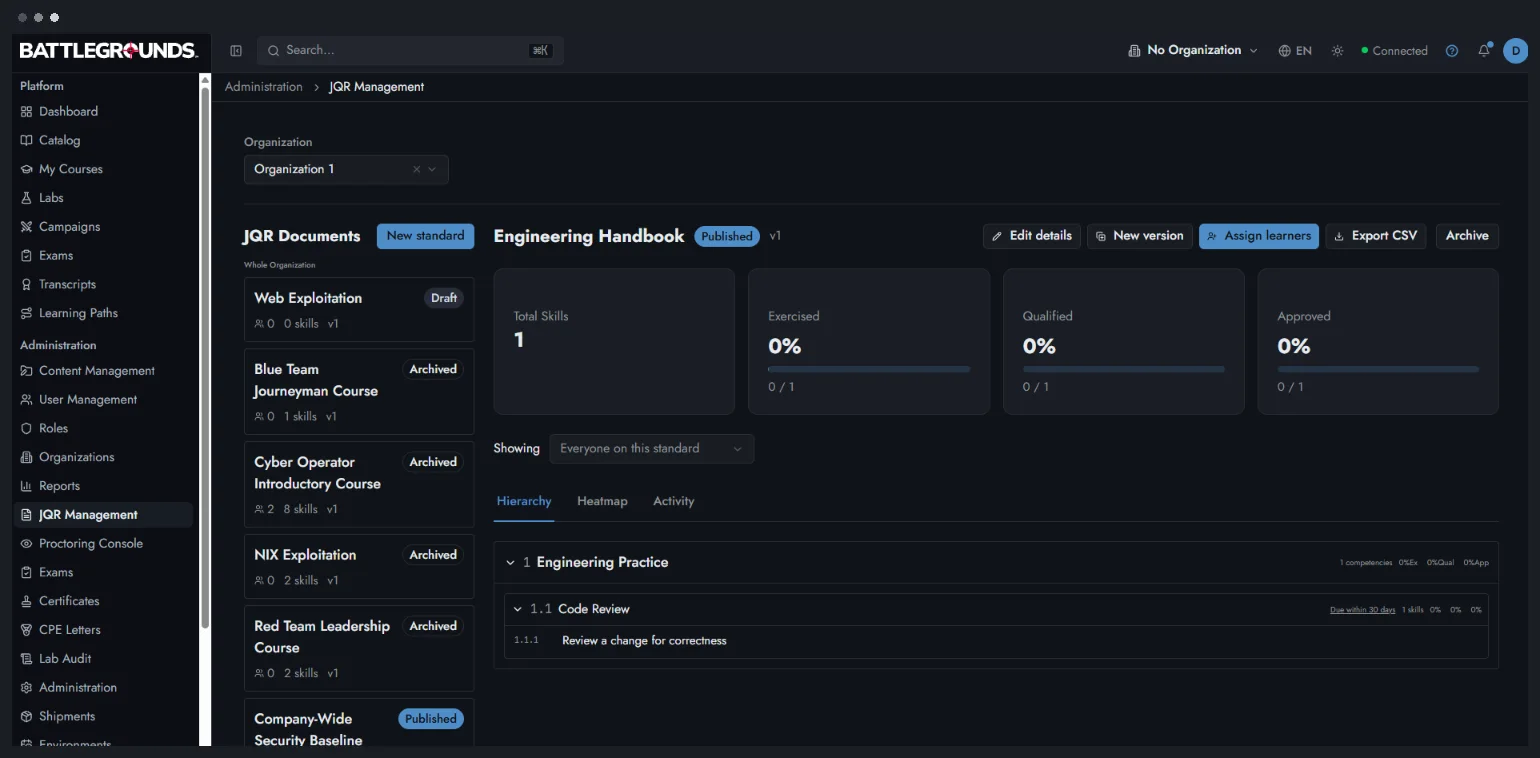
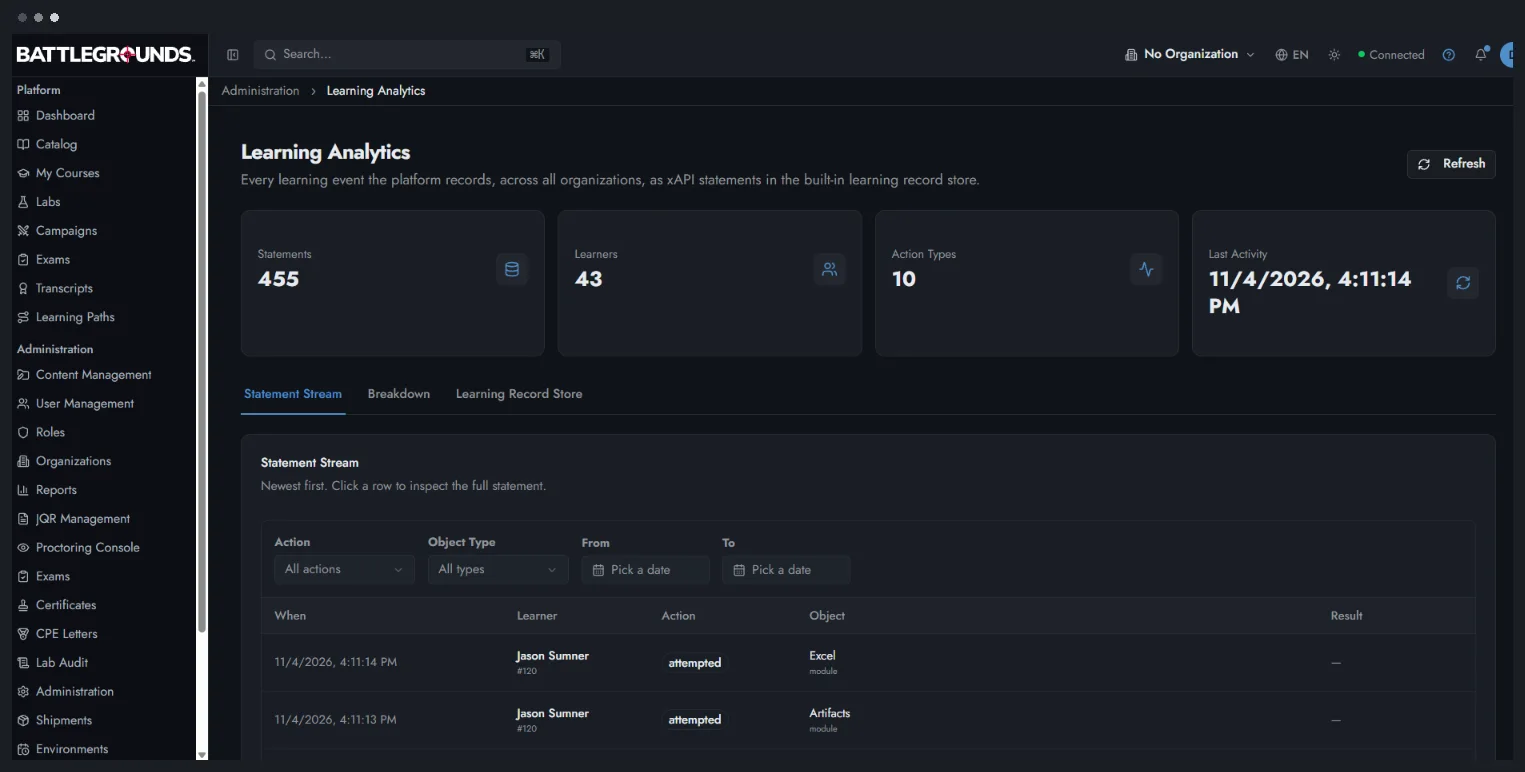
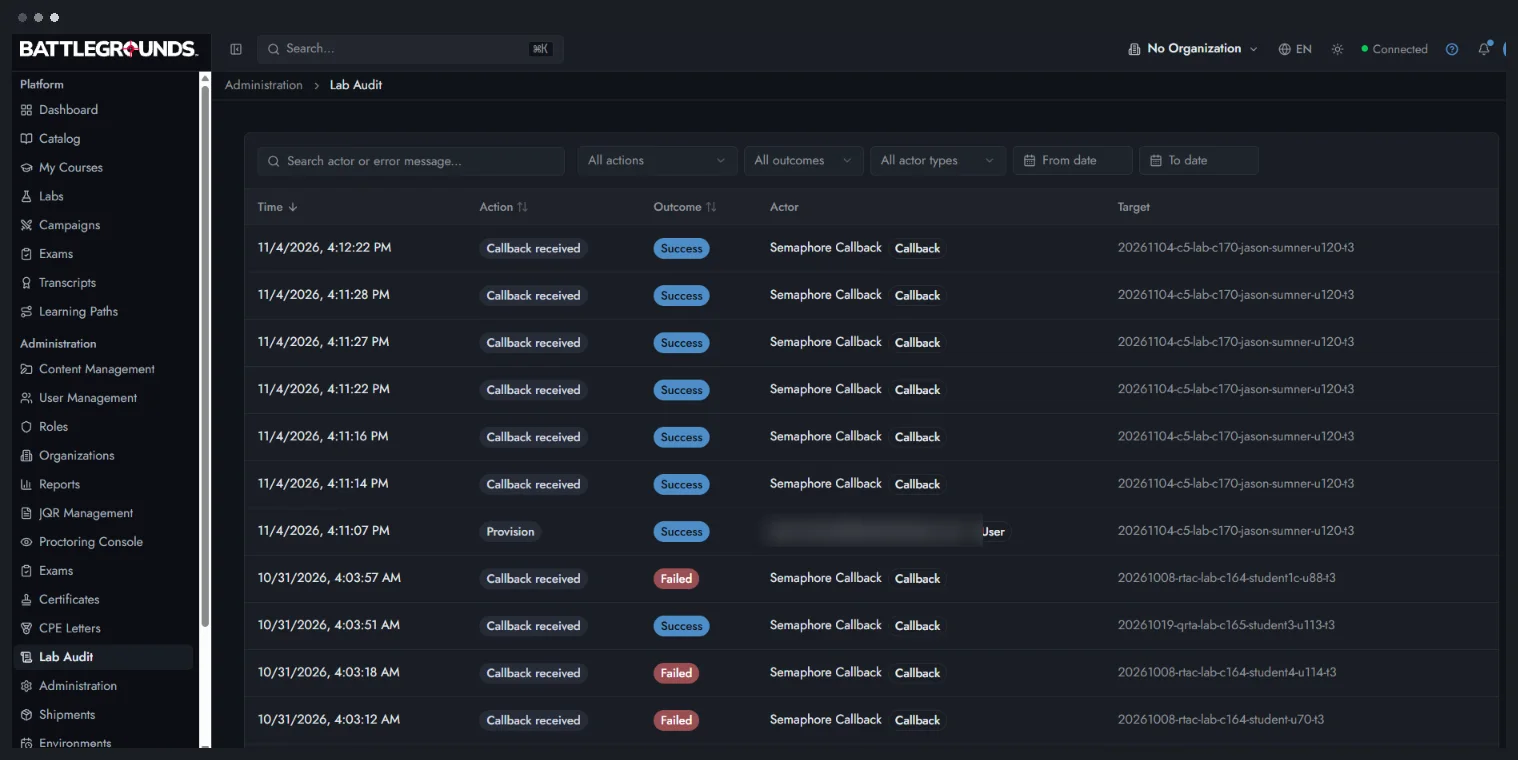
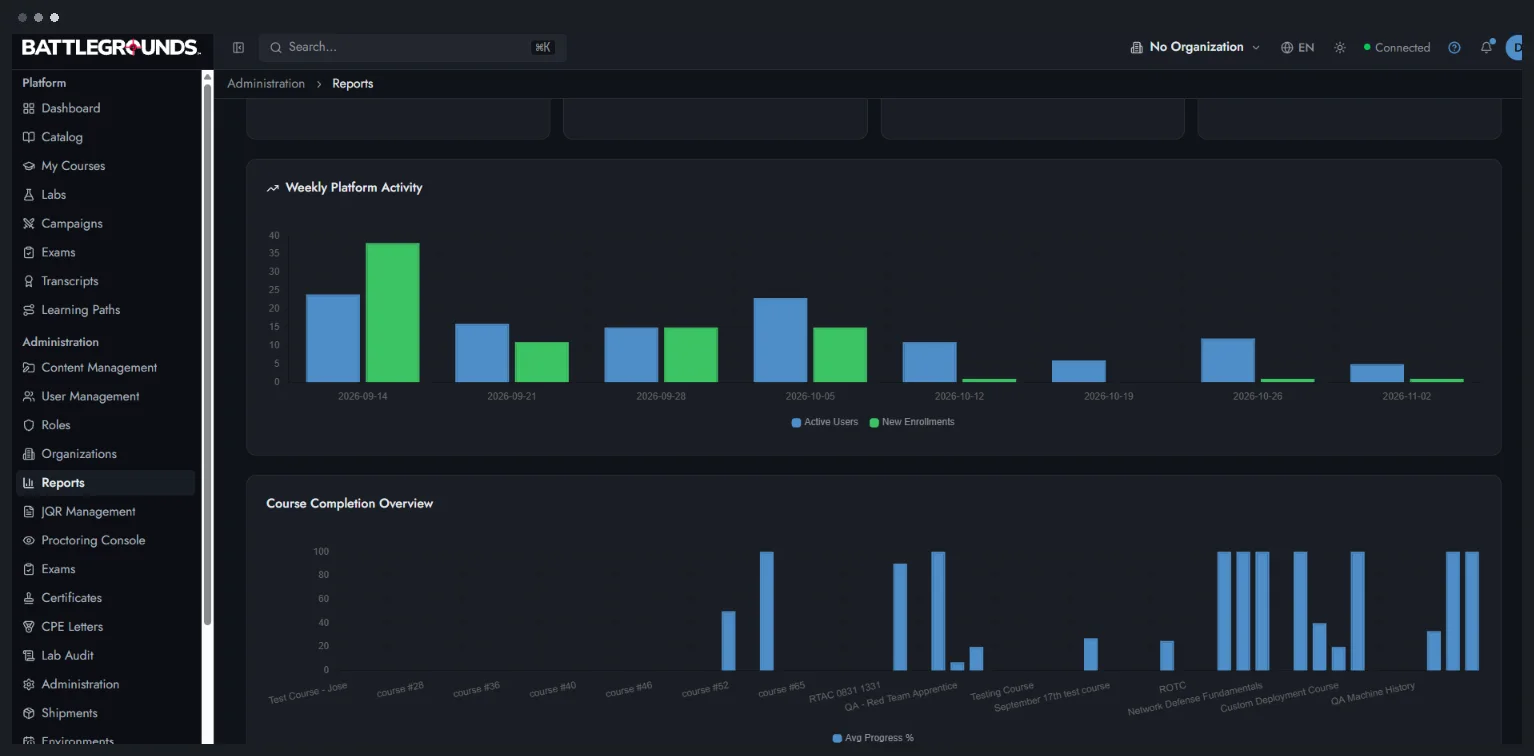
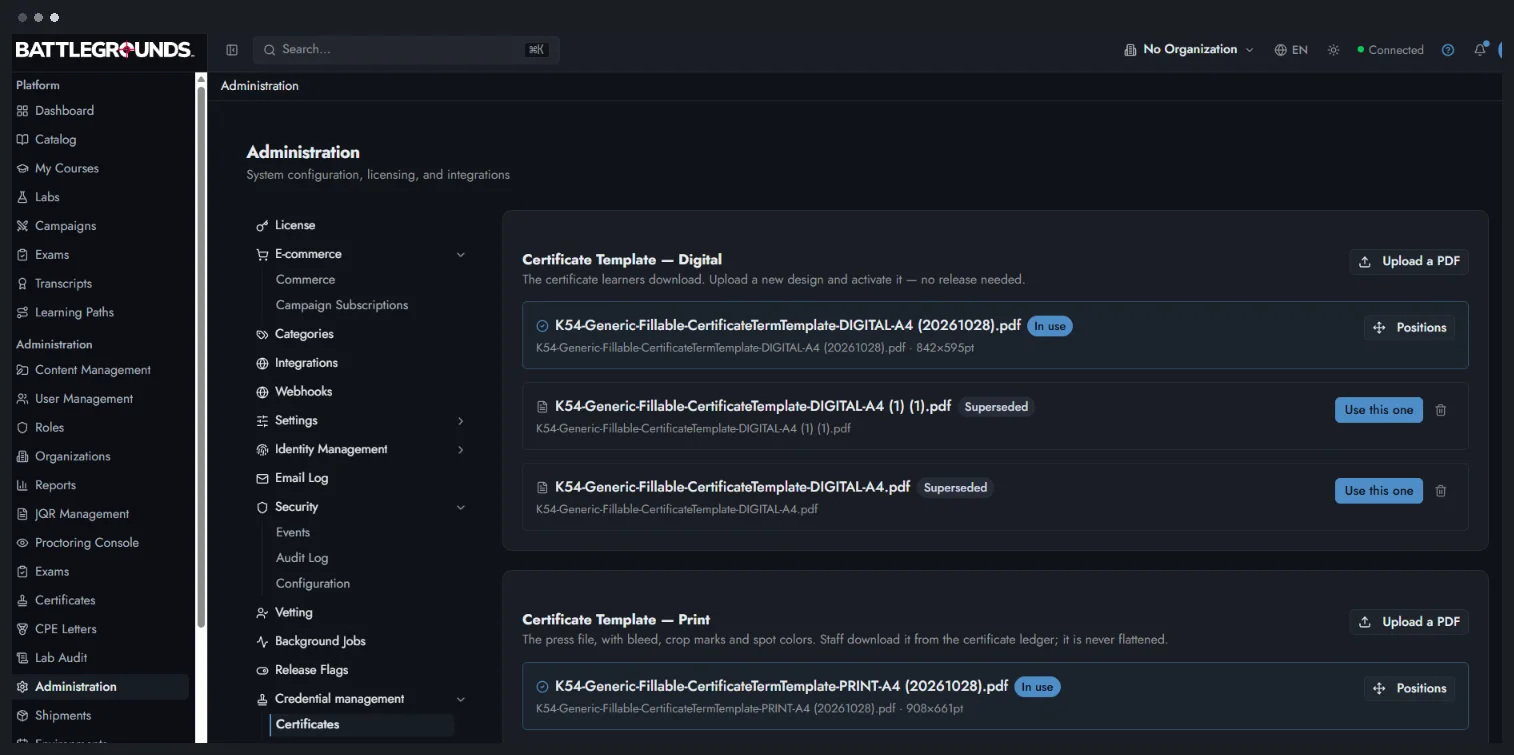
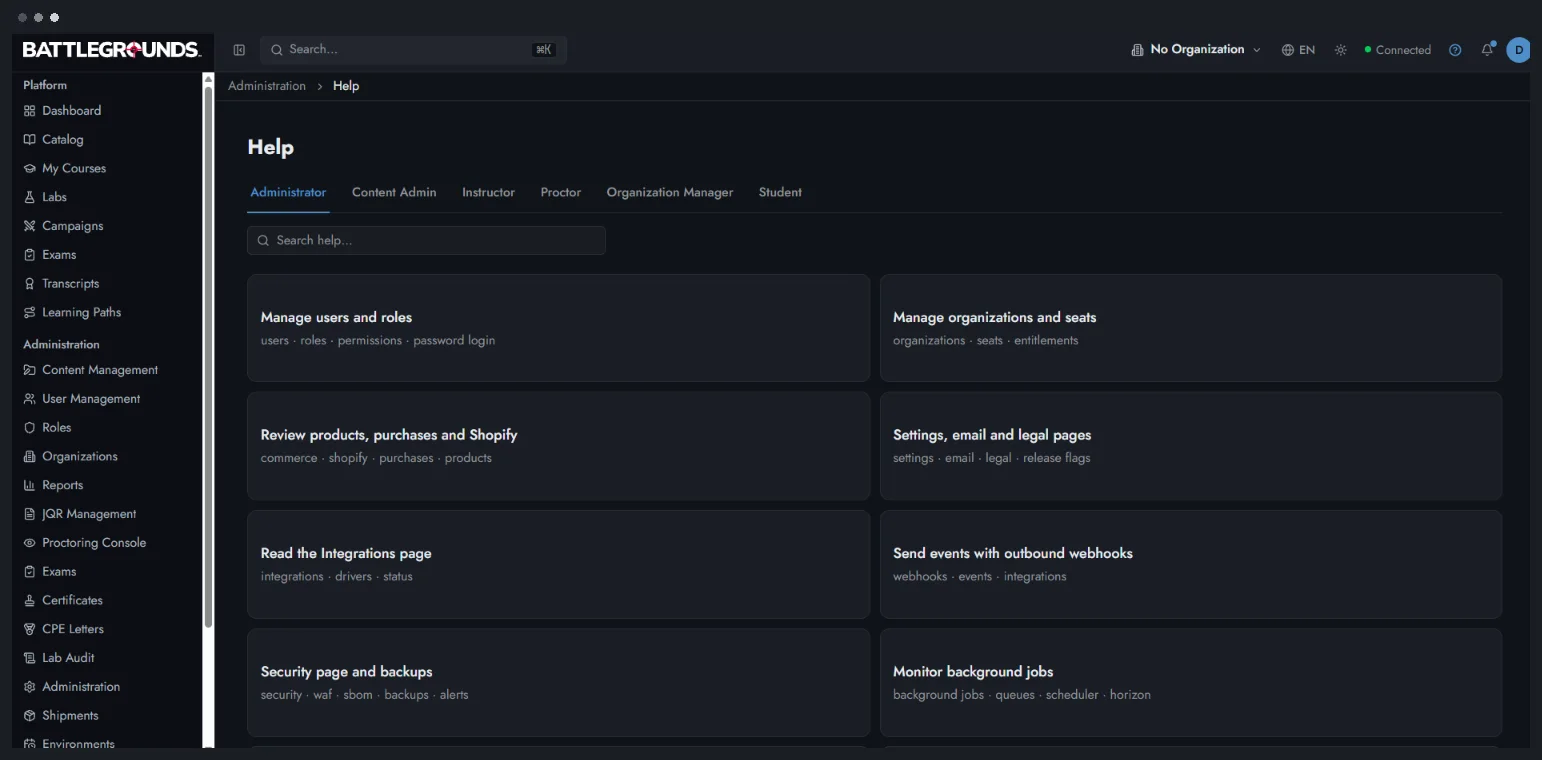
Leaders do not need an infrastructure diagram. They need to see that content, ranges, assessment, credentials, and evidence are one system. A learner moves through Battlegrounds in five steps.
Catalog and paths. The learner is pointed at the right pipeline for that organization.
Live lab. An isolated environment is provisioned from a template, for one person or for a team.
Hands-on exam. The attempt is graded from a queue, on what the operator did.
Credential. A certificate, and where it applies a CPE letter, with qualification tracked against a standard.
Evidence. Meaningful actions can land in the learning record. Lab failures land in the audit log.
This engagement is Team as a Service, and it is ongoing. The partnership is more than a year in, with more development planned over the next year and the foreseeable future. Markon did not bring Active Logic in to drop off a finished build. A Director of Engineering owns the work, from architecture through what is running now and what is still on the plan. That person writes and reviews the engineering, which keeps decisions with someone who still understands the system a year in. The engineers doing the work are senior, full time, and 100% U.S.-based.
Talk with a knowledgeable team member about a learning platform, a regulated workflow, or another system packaged software cannot carry.

Built by Active Logic, a U.S.-based custom software development company with 200+ projects delivered since 2014.