200+
Projects Delivered

Trusted By




TSIP (The Soil Inventory Project) is a greenfield React Native app built as a single codebase for iOS and Android. Field crews use it to collect soil samples with GPS mapping and offline capture in places with no cell signal, and it reconciles automatically when connectivity returns. It took more than 3,500 development hours, shipped to both the App Store and Google Play, and runs across hundreds of device configurations. The project is advised by Al Gore.
Top Applicant is a two-sided hiring platform built once in React Native and deployed to both stores with full feature parity to its web product. It runs a proprietary scoring engine, the Bruder Index, in production, with subscription billing and role-based access for candidates and employers. It is live and revenue-generating, not a demo behind a flag.
That is the React Native case in one sentence: one team, one codebase, both stores, no compromise on the features your users actually touch.
React Native lets one senior team ship a real app to both platforms. We use it where cross-platform reach, delivery speed, and a single maintainable codebase matter more than platform-specific flourishes.
Single-codebase iOS and Android applications for operations, logistics, and workforce management, deployed to both stores at once with native components and consistent UX.
Consumer and client-facing apps with secure authentication, push notifications, and real-time data, built to handle real user volume across both platforms.
Mobile tools for field teams that need GPS tracking, barcode scanning, photo capture, and form submission, designed to work reliably where connectivity is poor.
Apps that store, queue, and sync data locally so field crews and remote workers finish critical tasks with no network and reconcile automatically when signal returns, the way TSIP works in the field.
Marketplace and SaaS-style mobile apps with roles, subscription billing, and full parity to a companion web product, the pattern behind Top Applicant's two-sided hiring platform.
Monorepo architectures that share business logic, API clients, and validation between your React Native app and your React web app, so a rule is written once and enforced everywhere.
We do not treat every mobile project as a React Native project. We ship Flutter and fully native apps too, so our recommendation reflects your product, not the one tool we happen to sell.
React Native is usually the right call when a single build has to serve both stores with genuine feature parity, when your team already works in React, or when a mobile app needs to share logic with a React web product. TSIP and Top Applicant are exactly that shape. When an app is defined by pixel-precise custom UI or tight hardware SDK integration, we often reach for Flutter instead, the way we did on the K-State cattle ultrasound app with its Butterfly Network SDK. When an app needs deep platform APIs or heavy real-time graphics, fully native Swift or Kotlin can be the honest answer.
The point is that the framework should follow the product. Choosing React Native to fit a sales pitch, when the app really wanted native, is the kind of decision you pay for across every release that follows.
Every mobile engagement starts with the user journeys and the constraints, connectivity, device fleet, store policies, before a line of code. For field apps like TSIP, that means the offline and sync model is designed first, because it shapes everything downstream. For customer products, it means the auth, notification, and data-freshness model comes before the screens.
We deliver in two-week iterations with a working build in hand every cycle, distributed through TestFlight and Google Play internal tracks so stakeholders test on real devices, not slides. Early feedback on a real phone catches the things a mockup never will.
Performance work is targeted. We profile the actual app, move hot paths off the JS thread, and write native modules in Swift or Kotlin only where the data shows they are needed. The goal is native-feeling behavior on the screens users touch most, not micro-optimization for its own sake.
We ship with automated testing, CI/CD that builds and submits to both stores, dependency and OS-compatibility discipline, and documentation. Whether your team takes over or we continue through Team-as-a-Service, the codebase is built for whoever comes next.
Your Engagement Journey
Map requirements, define success criteria, identify risks
Design system architecture, plan delivery milestones
Iterative 2-week sprints with demos and feedback loops
Production deployment, knowledge transfer, ongoing support
Tell us about your platforms, your users, and where the app has to work. We'll align the right team and outline a clear path forward.
A member of our team will reply, usually within 15 minutes during business hours.
Phone
(888) 683-1337Sales & RFPs
sales@activelogic.comWhat Happens Next
React Native development pairs closely with several of our core service areas. These are the capabilities most commonly combined with a cross-platform mobile build.
As a U.S.-based custom software development company, we partner with leadership teams that need reliable execution, clear communication, and measurable delivery momentum across regions through our locations hub.
Mission-critical software delivery depends on governance, technical quality, and execution discipline. We run engagements with senior U.S.-based leadership and delivery controls built for operational continuity.
A Director of Engineering owns technical direction, risk management, and stakeholder alignment from planning through release.
Architecture reviews, QA discipline, and DevOps practices are integrated into the delivery rhythm to protect stability as scope evolves.
Structured handoffs, documentation, and release-readiness checkpoints keep momentum high while reducing disruption to internal teams.
Delivery Governance Loop
Real mobile apps our senior teams designed and shipped, led by the React Native builds behind TSIP and Top Applicant.
We build in all three, so the recommendation is based on your project, not our specialty. React Native fits when you want one JavaScript or TypeScript codebase across iOS and Android and your team already lives in the React ecosystem, the way we built TSIP and Top Applicant. Flutter is our call for pixel-precise UI or tight hardware SDK work, like the Butterfly ultrasound integration on the K-State app. Fully native Swift or Kotlin wins when an app needs deep platform APIs or heavy real-time graphics. If a single build has to serve both stores with genuine feature parity, React Native is usually the pragmatic answer.
React Native shares the large majority of code across iOS and Android while still rendering native UI components, not web views. For most business applications the performance difference is negligible, and you get faster delivery, lower maintenance, and a single codebase your team can reason about. We reach for fully native only when an app requires deep hardware integration or platform-specific APIs that React Native cannot access efficiently, and for those cases we write native modules in Swift or Kotlin that drop into the same app.
Yes. Business logic, API clients, validation rules, state management, and utilities can be shared between a React Native app and a React web app through a well-structured monorepo or shared package strategy. UI components differ because mobile and web have different interaction patterns, but the underlying logic layer, often a third to half of your total codebase, can be written once and used across both.
This is where a lot of our mobile work lives. TSIP is an offline-first React Native app: field crews collect soil samples with GPS mapping in areas with no signal, and the app queues and reconciles data automatically when connectivity returns. We design the local storage, sync, and conflict-resolution model up front, because bolting offline support onto an online-only app after the fact rarely ends well.
A focused React Native application, such as a field operations tool or customer-facing product, typically reaches production in 3 to 5 months with delivery milestones every two weeks. More complex platforms with offline sync, deep integrations, and multiple user roles run 6 to 10 months. We scope by functional requirements and ship working features incrementally so you can validate direction early and adjust based on real usage.
React Native apps need regular dependency updates, OS-compatibility testing when Apple and Google ship new platform versions, and performance monitoring. We build automated testing and CI/CD into every project so updates deploy confidently. Many clients keep us engaged through our Team-as-a-Service model for feature work, store submission management, and scaling. We also support full knowledge transfer when your internal team will own the app long term.
Hire us for a single project, to add capacity to your team, or to be your entire development team. However you engage, you get the same director-led accountability, 100% U.S.-based senior engineers, and mission-critical delivery standards.
With You
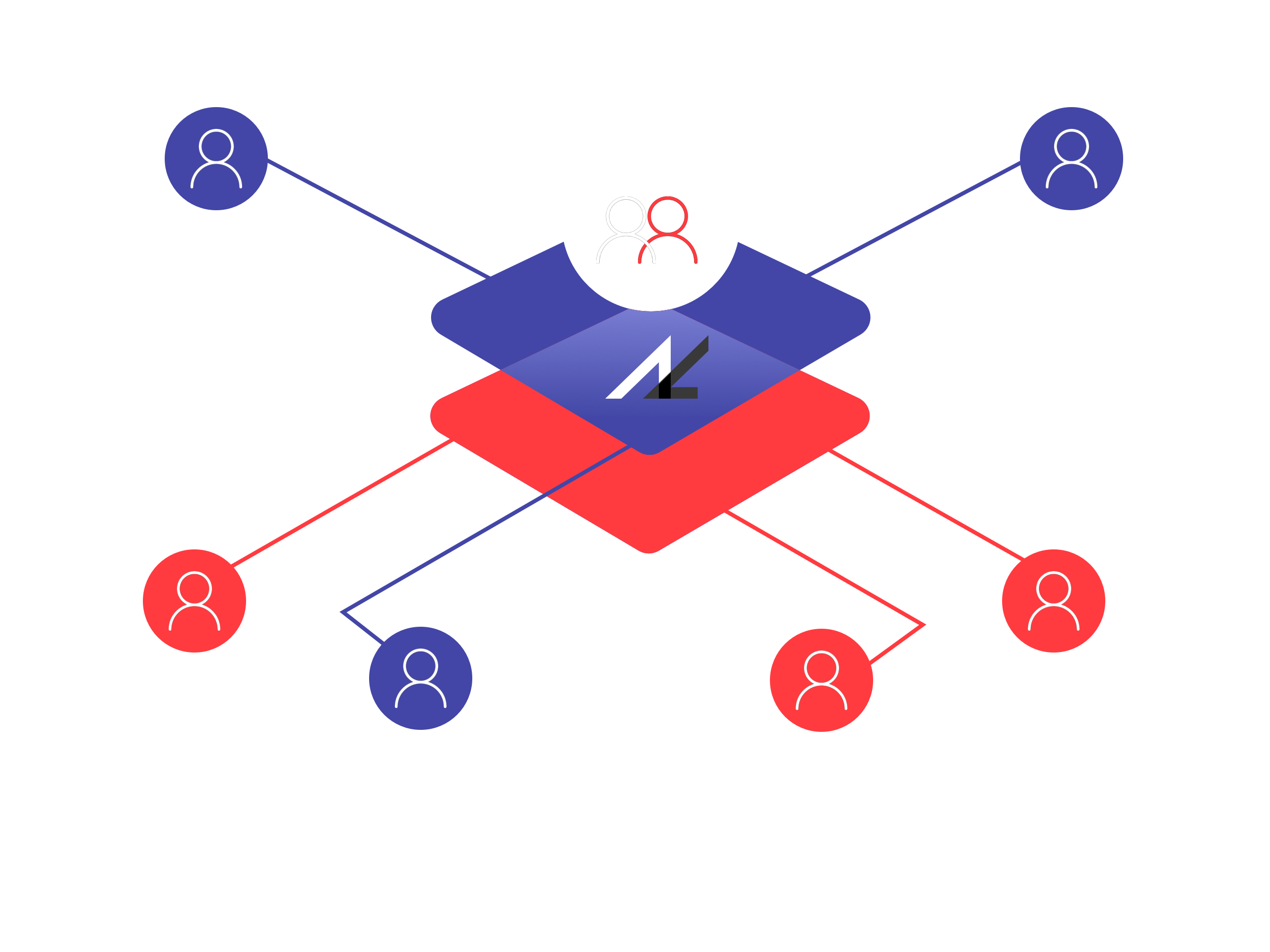
Active Logic engineers integrate into your planning cadence and stakeholder workflows as an extension of your internal team, adding leadership and delivery capacity without disrupting the way your organization already works.
For You
Active Logic leads planning, implementation, QA, and release execution end-to-end while maintaining transparent checkpoints with your leadership team, so outcomes stay predictable and management overhead stays low.
Share your platforms, your timeline, and how your users will use the app. We'll match the right senior engineers and define a practical next step.
