
Designing TPS Nexus, the plant maintenance and safety platform for Total Plant Solutions

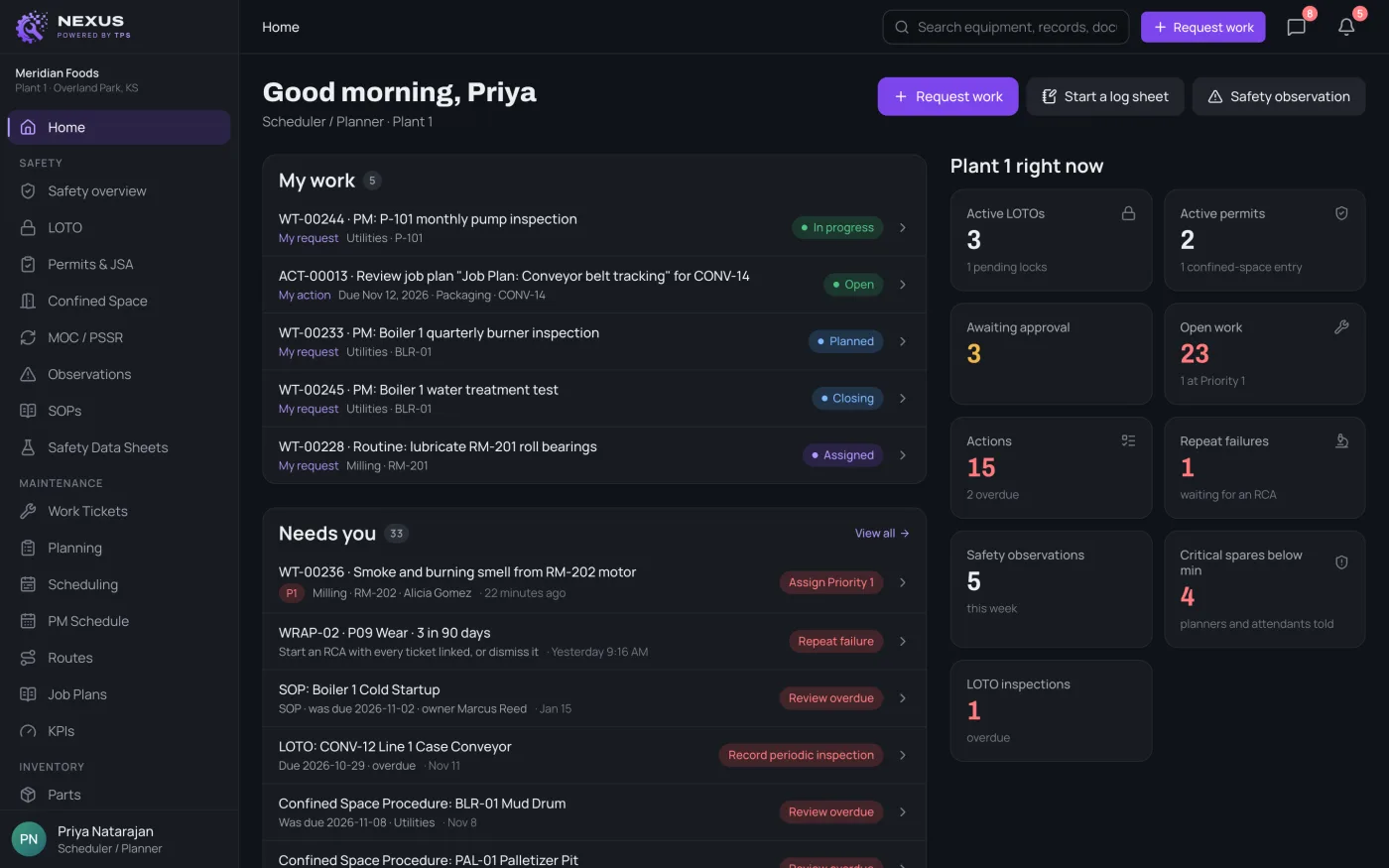
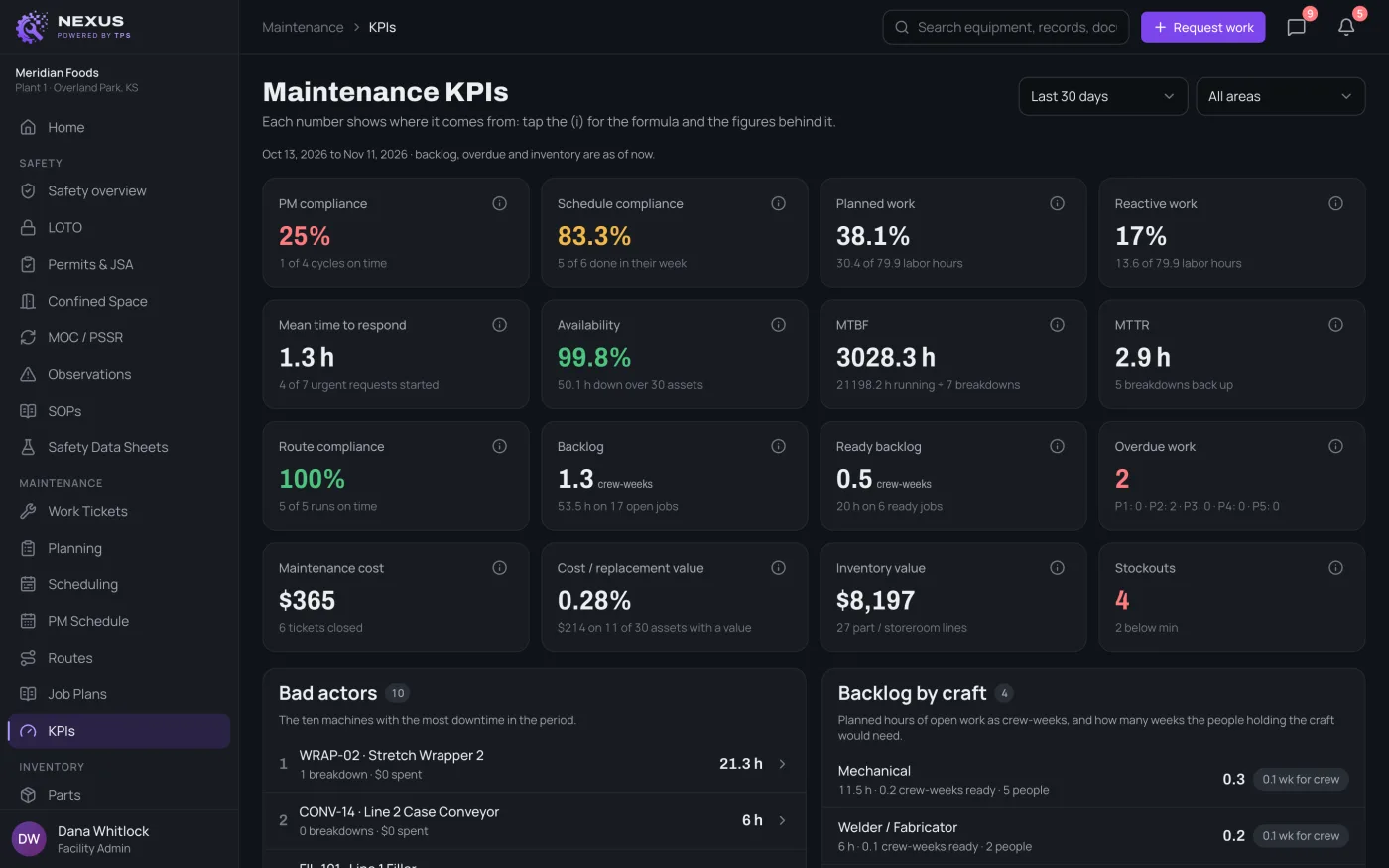
Total Plant Solutions builds TPS Nexus, a plant maintenance and safety platform for manufacturing plants. Safety work and maintenance work are one operation. Lockout and tagout, permits and job safety analysis, confined space, management of change, observations, procedures, and safety data sheets sit next to work tickets, planning, scheduling, preventive maintenance, equipment, and parts.
Active Logic designed the new console with Total Plant Solutions and built a working, clickable prototype. It is a UX rebuild of the product: a React web app with a desktop rail for planners, safety leaders, and administrators, and a phone-width shell for operators. The screens on this page are that prototype.
The screens use a fictional demo plant, Meridian Foods. The names and the figures are there so the workflow is visible. They are prototype data.
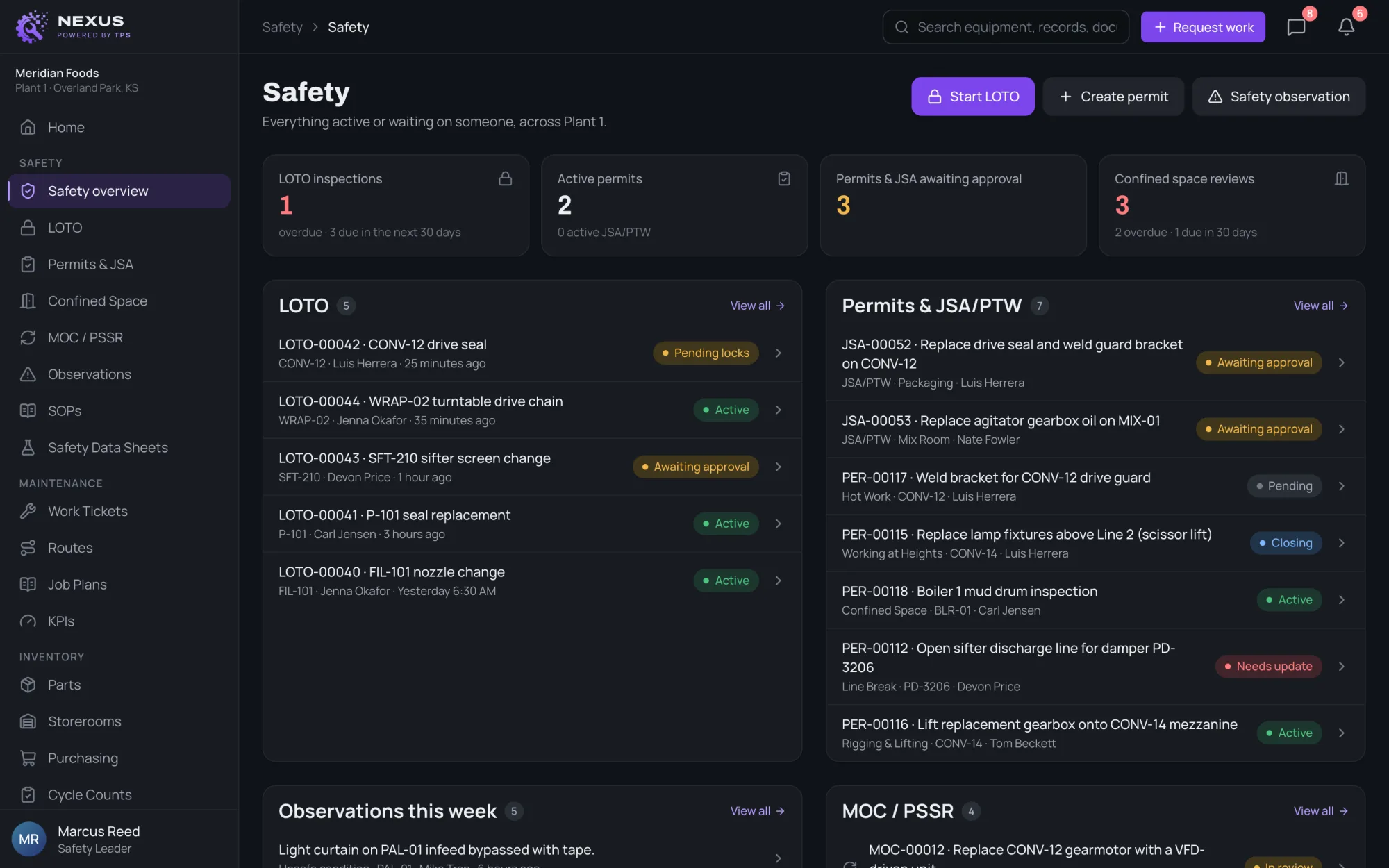
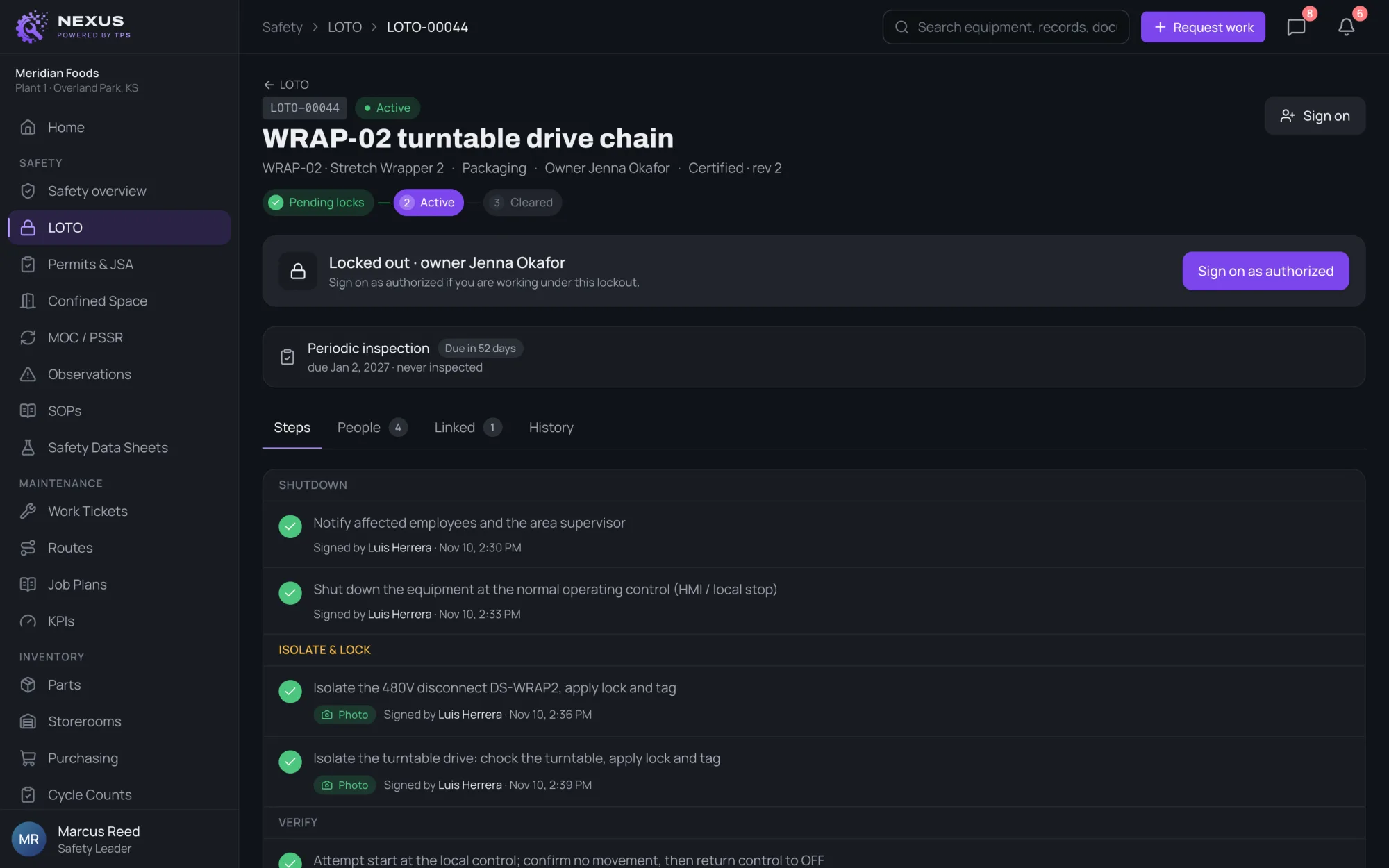
Plant safety and maintenance usually sit in different places. A lockout is on paper or in one system. A permit is in another. The work ticket is in an application that has aged past the way the plant runs. Parts, the schedule, the log sheet, and the downtime review are kept in spreadsheets and side files. The person who needs the record is on the floor, and the record is somewhere else.
Total Plant Solutions needed a console that treats that as one job. A planner, a safety leader, a mechanic, and an operator should open the same plant, see the work that needs them, and move a record from request to close without retyping it into a second tool. The product already existed. The work was a UX rebuild: role-aware screens for the work a plant already does.
What the rebuild had to hold:
- One plant. Safety, maintenance, parts, and the daily record open from the same console.
- Role-aware. A scheduler, an operator, and a Total Plant Solutions administrator each land on the work that role owns.
- Phone width. Operators get the same prototype in a phone-width shell.
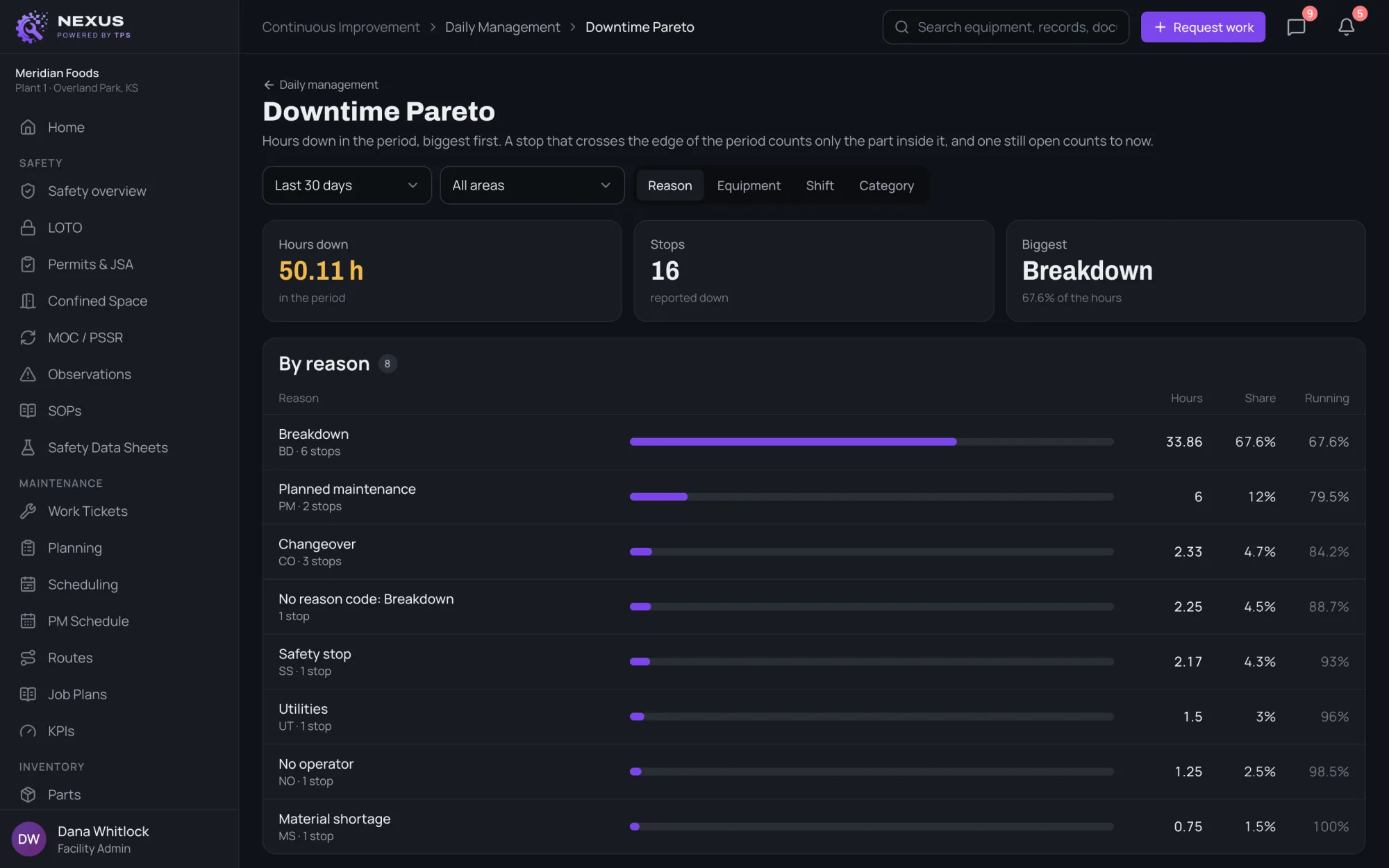
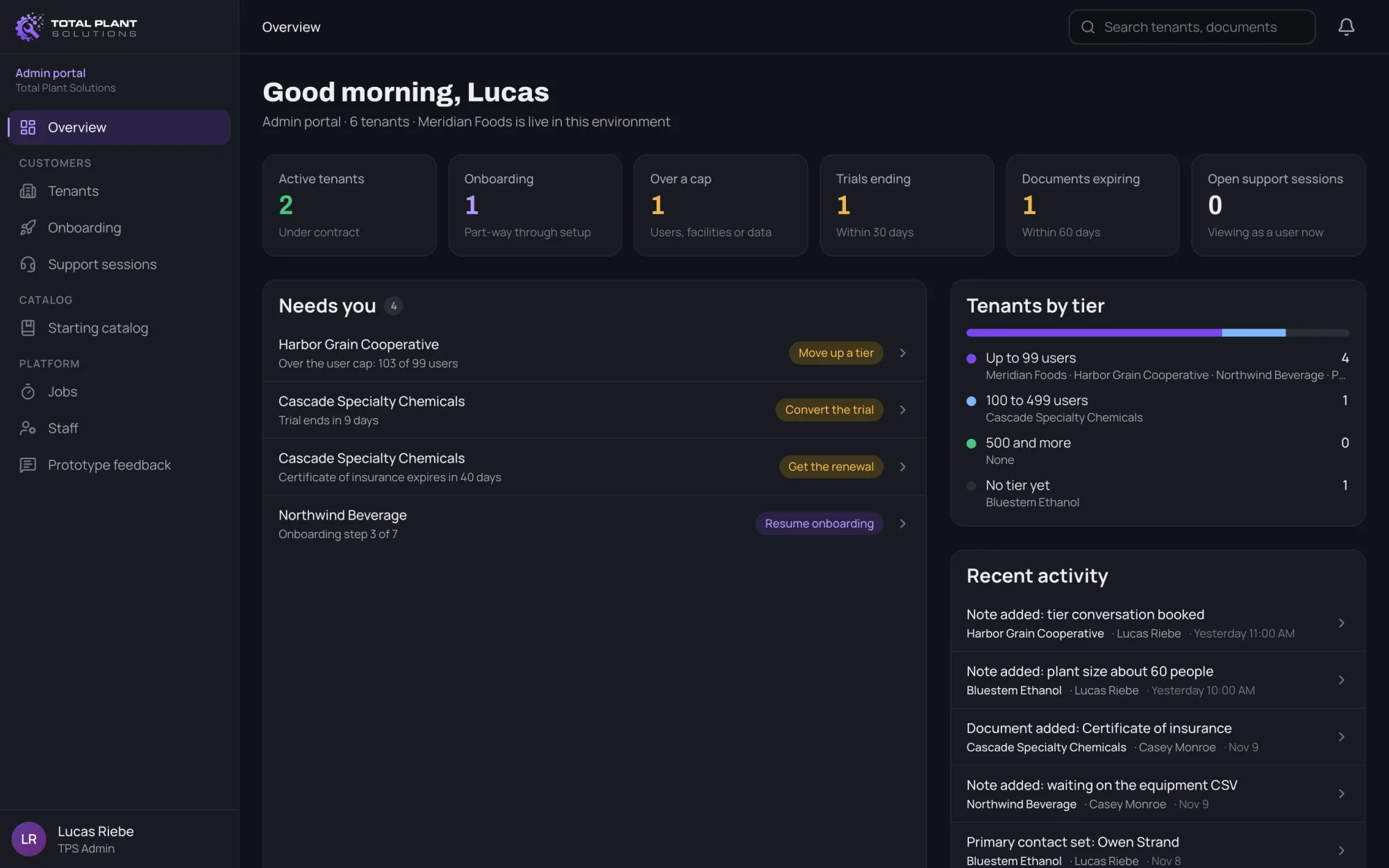
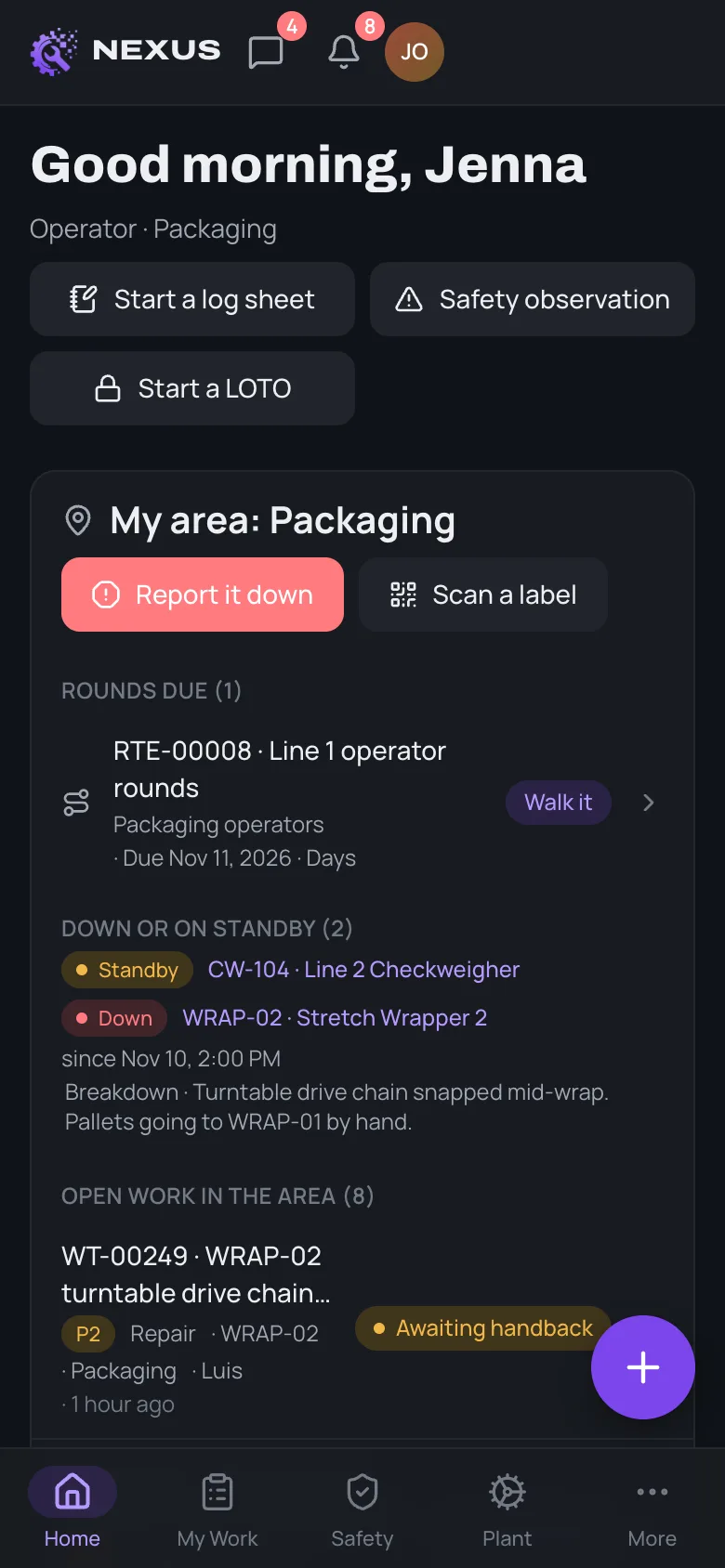
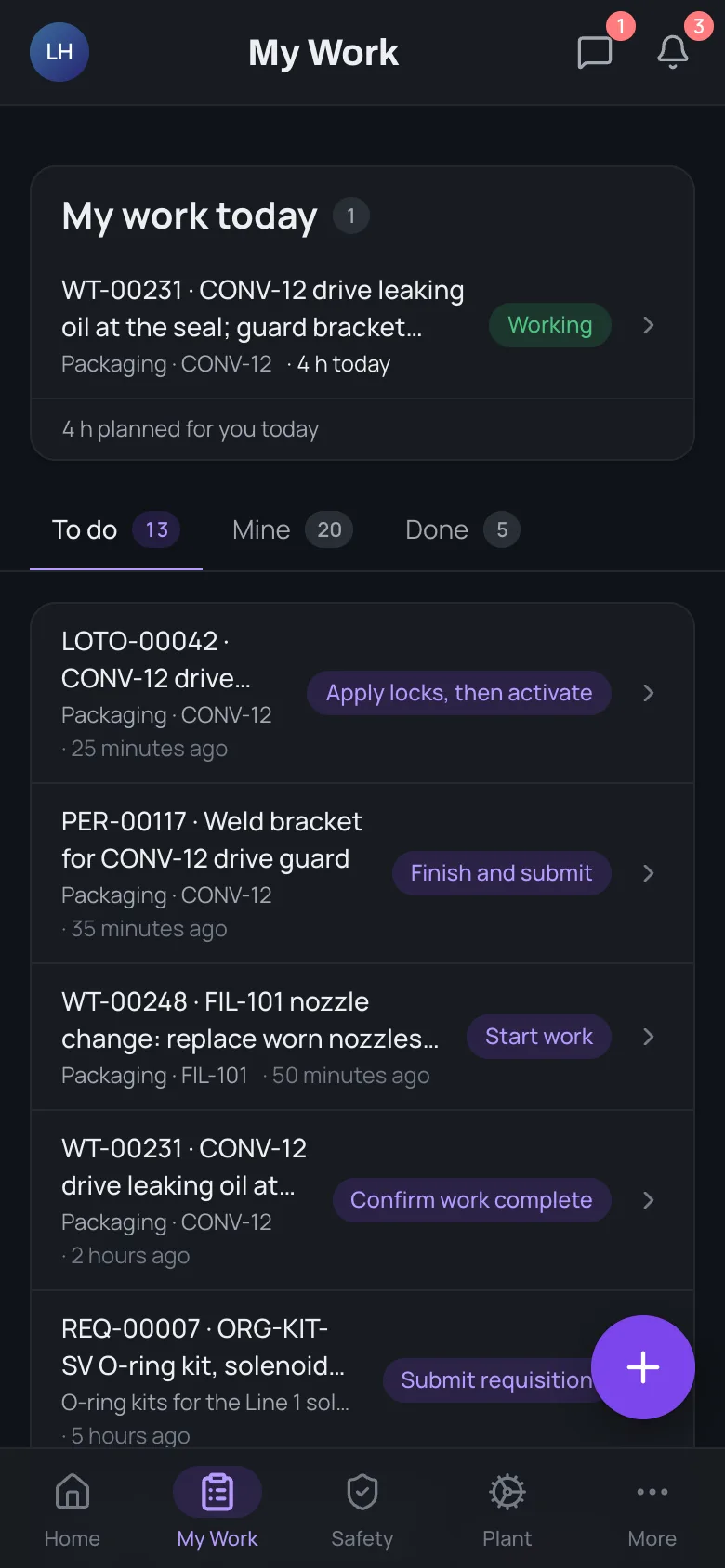
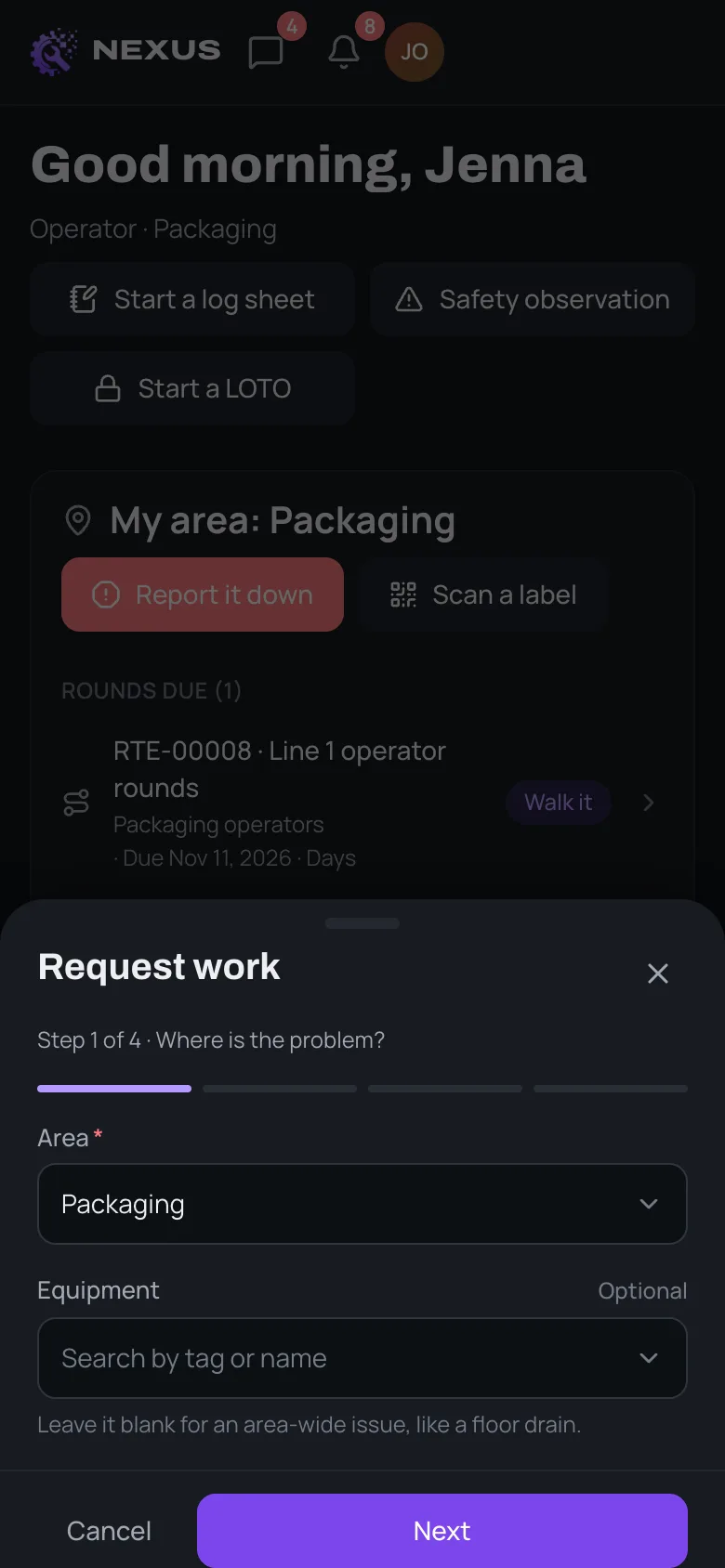
The prototype is a clickable React application. On a desktop, a rail groups safety, maintenance, inventory, and operations. At phone width the same app becomes an operator shell: Home, My Work, Safety, Plant, and More. A scheduler sees the queue and the week. An operator sees the area, the round, and the equipment that is down. A Total Plant Solutions administrator sees the customer plants on the account.
The prototype covers plant safety (lockout and tagout, permits and job safety analysis, confined space, management of change and pre-startup safety review, observations, procedures, and safety data sheets), maintenance (work tickets, planning, scheduling, preventive maintenance, job plans, routes, equipment and a printable equipment label, maintenance KPIs, and a downtime Pareto), inventory and purchasing, operations (log sheets, shift notes, and daily management), continuous improvement (root cause analysis, failure modes and effects analysis, audits, standard work, and a skills matrix), and the admin portal for the customer plants on the account.
The pairs below walk that console. The line under each screen is the job that screen does. The plant, the people, and the counts are prototype data.
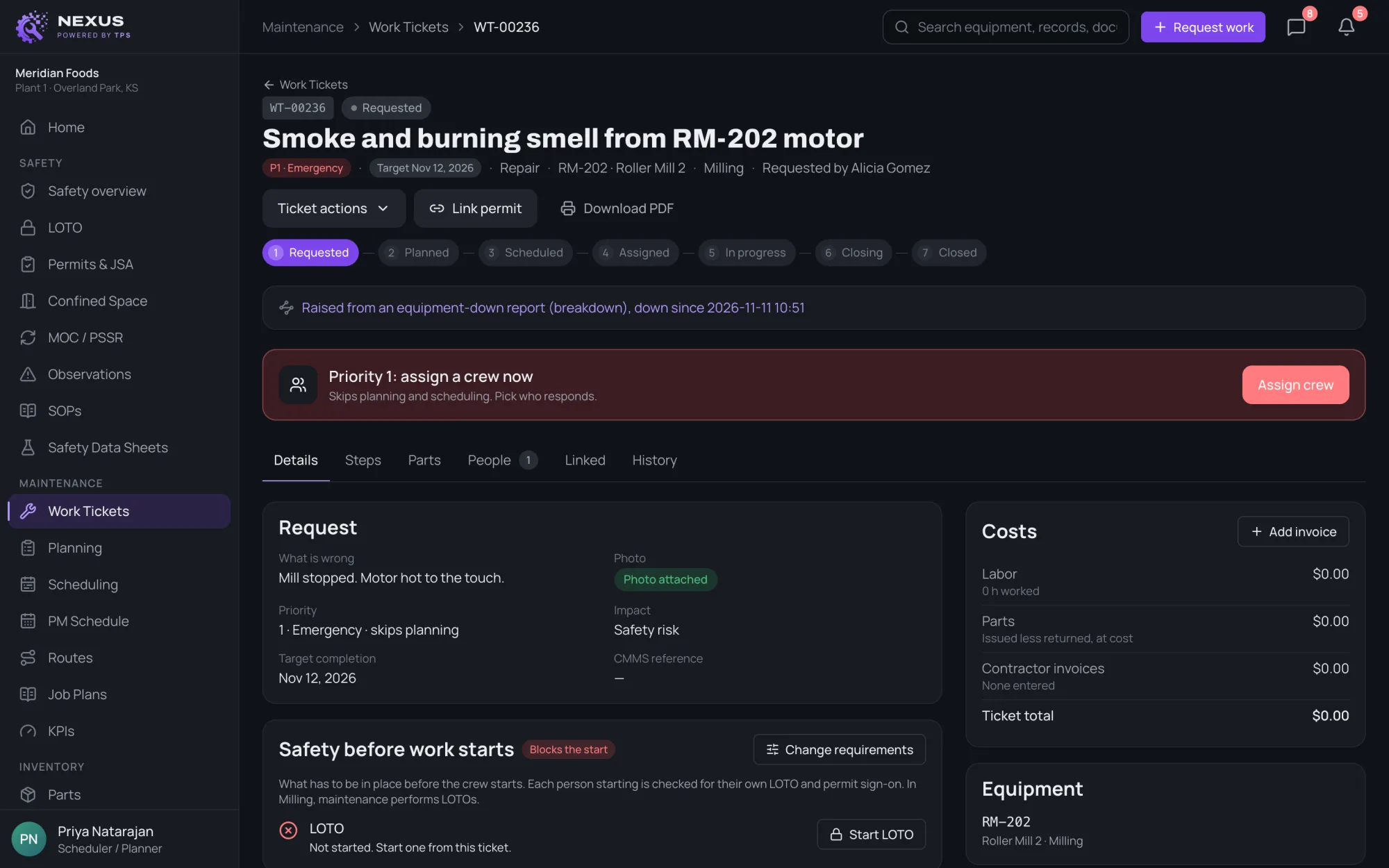
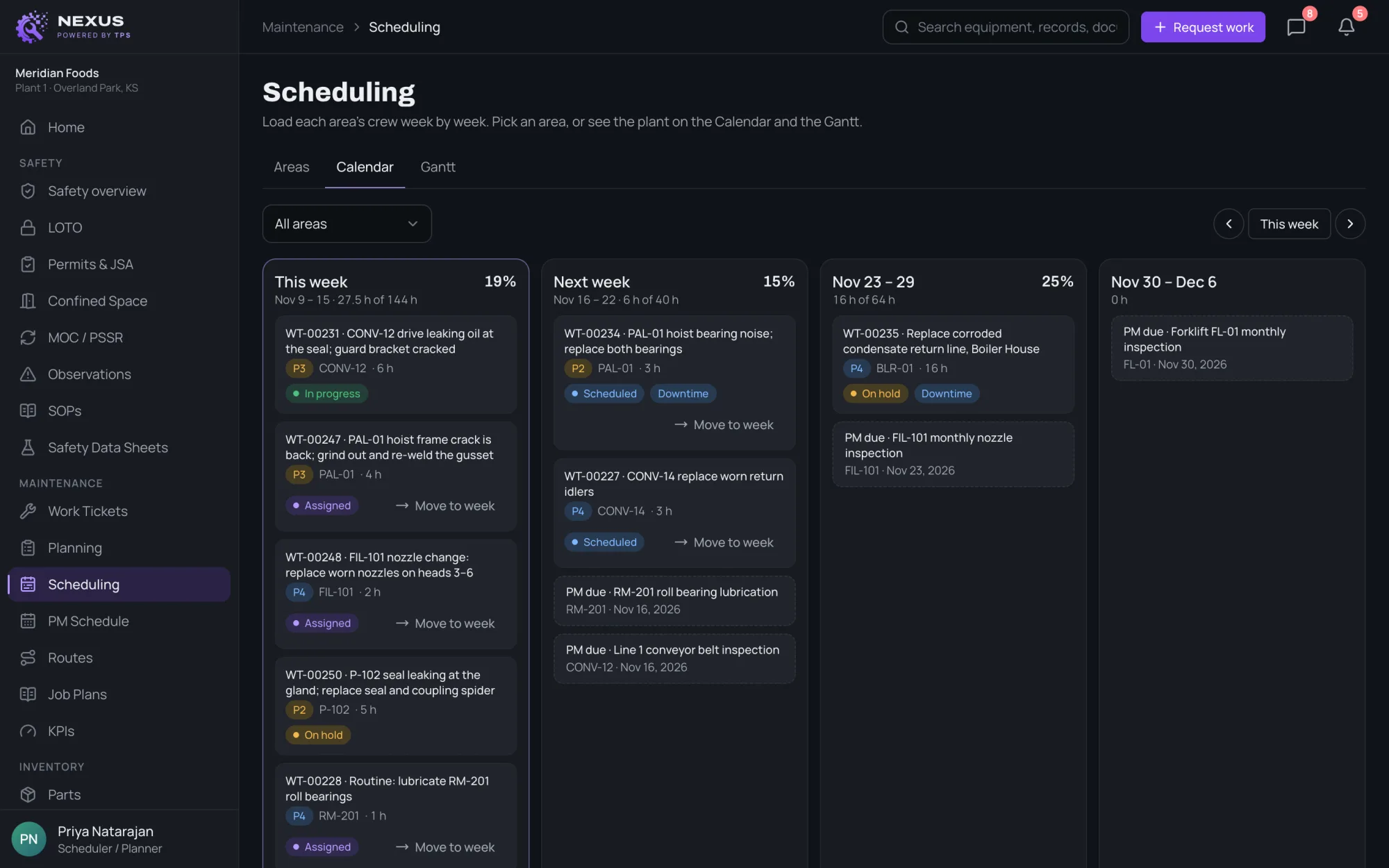
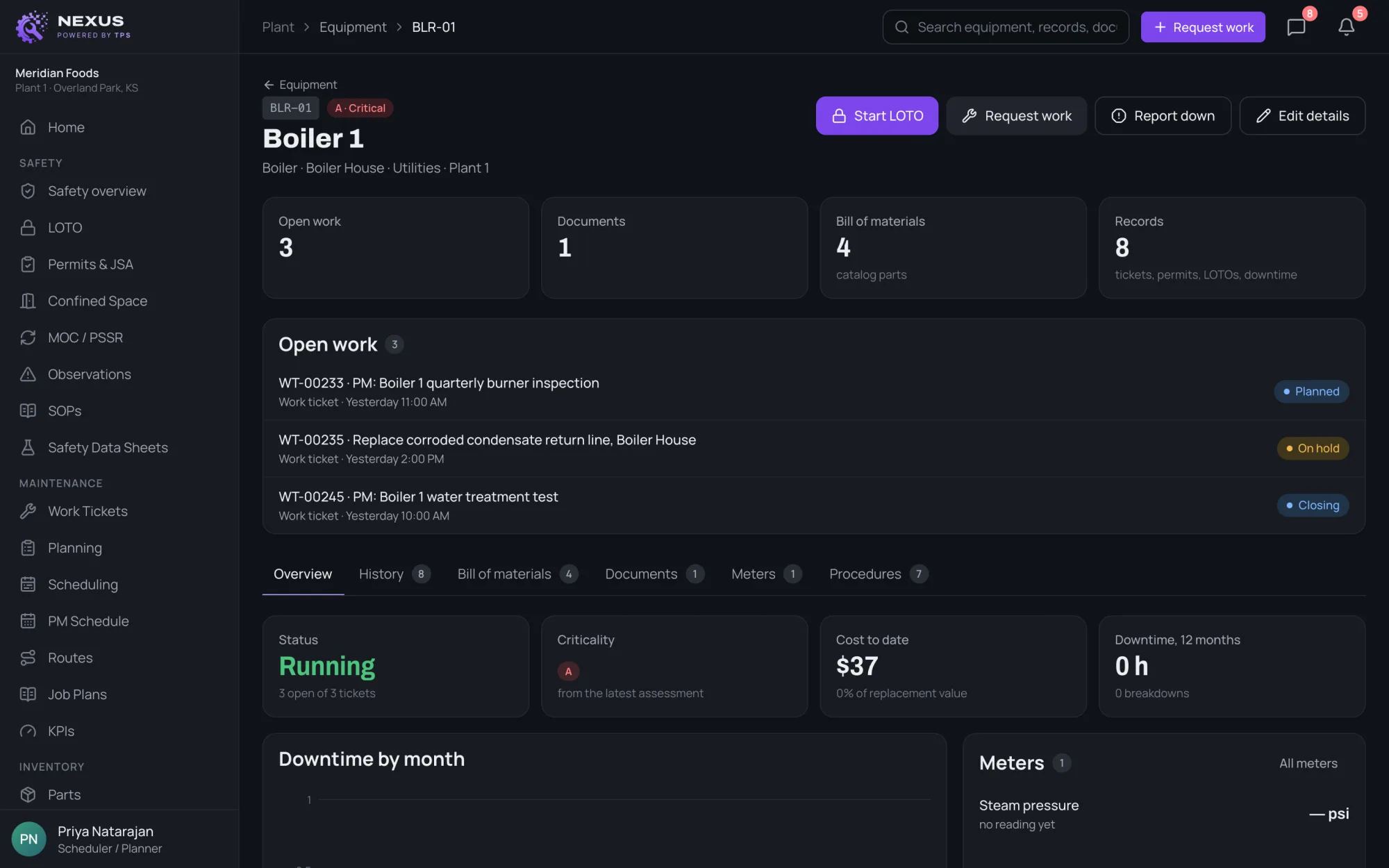
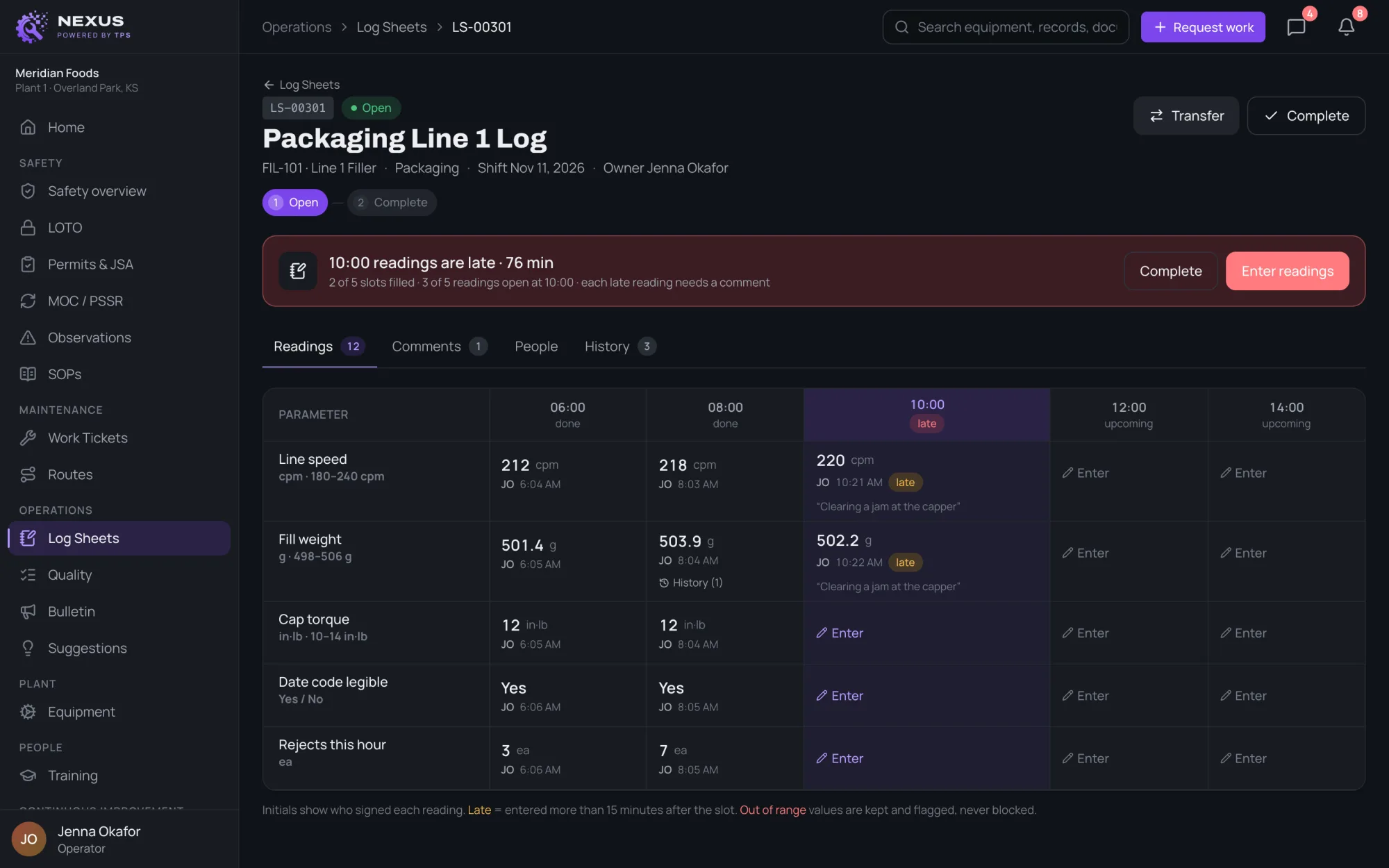
These three screens are the phone-width operator experience of the same prototype. The operator opens the area, sees what is down, walks a round, and requests work from the floor. What is shown here is the phone-width shell of the web prototype.
The production build is underway. It is Laravel 13 and React 19 on PostgreSQL, with row-level security so each customer is isolated in the database. Sign-in uses passkeys and two-factor authentication. Permissions are role-based, so a person sees the plants, areas, and actions their role allows.
The screens above are the designed prototype. The production build is being written to that UX. A native operator app is planned. The phone screens on this page are the phone-width operator experience of the prototype.
Active Logic designed the console with Total Plant Solutions and built the working prototype. The only office is in Midtown Kansas City.
The prototype is a React 19 web app built with Vite. The production build underway is Laravel 13 on PHP 8.4, with Inertia, React 19, TypeScript, and Tailwind on the interface, and PostgreSQL with row-level security for multi-tenant plants. Authentication in that build includes passkeys and two-factor authentication.
Built by Active Logic, a U.S.-based custom software development company with 200+ projects delivered since 2014.

Get your project scoped
Schedule a call with a knowledgeable team member about maintenance and safety software that has to match how a plant actually runs.
