
Building a House vs. Building Software: Why the Foundation Matters | Active Logic Insights
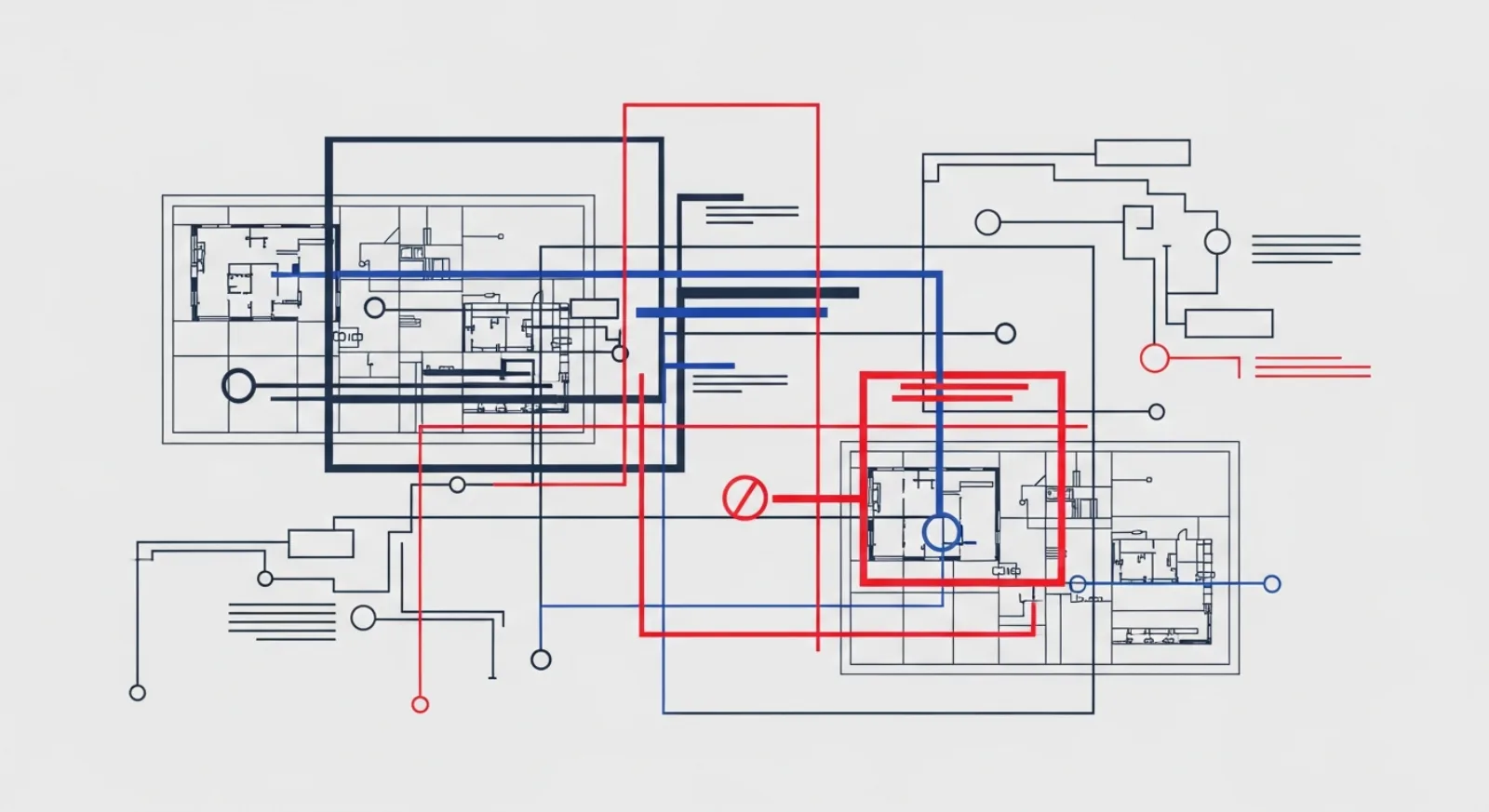
If you have ever built a custom home — or even renovated one — you already understand more about custom software development than you think. The parallels are not just metaphorical. The same principles that determine whether a construction project succeeds or turns into a money pit apply directly to building software.
This is the analogy we find ourselves using most often with business leaders who are commissioning custom software for the first time. It works because the dynamics are genuinely the same — and the mistakes people make are eerily similar.
You Would Not Build a House Without Blueprints
Nobody hires a construction crew and says “just start building — we will figure out the rooms as we go.” That sounds absurd. Yet companies commission software development projects every day with exactly that approach: vague requirements, no architecture plan, and a team that starts coding immediately because “we need to move fast.”
In construction, blueprints are non-negotiable. They define the structure, the load-bearing walls, the plumbing runs, the electrical layout. They exist so that every decision made during construction has a reference point — and so that the inspector has something to verify against.
In software, architecture plays the same role. Which systems need to communicate? Where does data live? What are the performance requirements? How will the system scale when usage grows? What security boundaries need to exist?
Skipping this phase does not make the project faster. It makes the project unpredictable. Every construction foreman knows that changes after the foundation is poured are expensive. Every experienced software architect knows the same thing about changing core architecture after development is underway.
The Foundation Is Everything You Cannot See
When you tour a finished home, you admire the kitchen, the flooring, the natural light. Nobody compliments the foundation. But the foundation is the reason the house is still standing, the floors are level, and the walls are not cracking.
Software architecture is the foundation. It is the database design, the API structure, the authentication system, the cloud infrastructure that runs everything. Users never see it. Stakeholders rarely ask about it. But it determines whether the system is fast or slow, secure or vulnerable, maintainable or a nightmare to update.
Organizations that pressure development teams to skip architectural planning and jump straight to visible features are making the same mistake as a homeowner who tells the contractor to skip the foundation work and start on the kitchen. It might look great for a few months. Then the cracks appear.
Scope Creep Is the Sunroom Problem
Every homebuilder has a version of this story. The project starts with a clear plan and a defined budget. Then during construction, the homeowner walks through and says: “You know what would be great? A sunroom off the back. Can we add that?”
The answer is always yes — for more money and more time. A sunroom means extending the foundation, adjusting the roofline, running additional electrical and HVAC, and modifying the exterior finish. What sounds like “just one more room” is actually a cascade of changes that touch every trade involved in the project.
Software scope creep works identically. “Can we add one more feature?” is the software equivalent of the sunroom. That one feature requires database changes, API modifications, UI updates, testing, and often adjustments to existing functionality that was already built. The feature itself might be small, but the ripple effects are not.
This is not an argument against changing scope — requirements evolve, and good development processes accommodate that. It is an argument for understanding the cost honestly. In construction, a good contractor gives you a change order that clearly shows the impact on budget and timeline. In software development, a good development partner does the same thing. If your partner says “sure, we can add that” without discussing trade-offs, that is a red flag.
Inspections Are Not Optional
When you build a home, the building inspector shows up at multiple stages — foundation, framing, electrical, plumbing, final. Each inspection verifies that the work meets code and that the next phase can proceed safely. Nobody argues with the inspector. The inspections exist because problems caught early are fixable; problems caught after the drywall goes up are expensive.
Quality assurance in software serves the same purpose. Code reviews, automated testing, manual QA, security audits — these are inspections. They catch defects when they are cheap to fix instead of after the system is live and customers are affected.
The companies that treat testing as optional or cut QA budgets to save money are building homes without inspections. They might get lucky. More often, they end up with the software equivalent of a house that passes a casual walkthrough but has plumbing that leaks inside the walls.
At Active Logic, testing is built into every phase of delivery, not bolted on at the end. Our Directors of Engineering review architecture decisions and code quality throughout the engagement — the same way a general contractor checks work at every stage, not just at final walkthrough.
Custom vs. Pre-Built: When to Buy and When to Build
Here is where the analogy gets particularly useful for business leaders making technology decisions.
Buying an existing home is like buying SaaS software. Someone else designed it, built it, and maintains it. You move in and adapt your life to fit the floor plan. If the layout works for you, buying is efficient — you get a functional space faster and cheaper than building from scratch. But you live with someone else’s design decisions. The kitchen might not be where you want it. The bedrooms might be too small. The wiring might not support your home office setup.
Building a custom home is like building custom software. You define the requirements. The architecture serves your specific needs. Everything is where you want it because it was designed for how you operate. But it costs more, takes longer, and requires active involvement throughout the process.
The decision framework is the same in both cases:
- Buy when your needs are standard. If a SaaS product handles 90% of what you need and the remaining 10% is not critical, buy it. Just like buying an existing home when the layout works well enough.
- Build when your needs are unique. If your business processes, data requirements, or competitive advantages depend on software that works exactly the way you need it to, build it. Just like building a custom home when no existing floor plan fits your family and lifestyle.
- Renovate when you have outgrown the existing structure. Sometimes the right answer is neither buying new nor building from scratch — it is modernizing what you have. Legacy software modernization, like home renovation, preserves the value of past investment while updating the parts that no longer serve you. A web application that was built five years ago may need a new front end and updated infrastructure, not a complete rebuild.
Modular Design: The Open Floor Plan Principle
Modern homes increasingly use open floor plans and modular design — spaces that can be reconfigured as needs change. A bonus room that works as a playroom today can become a home office in five years without structural renovation.
Good software architecture follows the same principle. Modular design — separating concerns, building clean interfaces between components, designing services that can be replaced or upgraded independently — creates systems that adapt as the business evolves.
A portal that is built as a monolith might work fine today but becomes a bottleneck when you need to add mobile app access or integrate with new CRM or ERP systems. A portal built with modular architecture can add those capabilities without rebuilding the core.
Think of it as the difference between a home where moving one wall requires restructuring the entire second floor versus a home where rooms are defined by design rather than by load-bearing constraints.
The Contractor Relationship Matters Most
Ask anyone who has built a custom home what mattered most, and the answer is rarely the brand of appliances or the type of flooring. It is the relationship with the general contractor. Did they communicate clearly? Did they manage the subcontractors effectively? Did they tell you about problems early? Did they deliver what they promised?
The same is true for software. The technology matters, but the relationship with your development partner matters more. Clear communication, transparent progress reporting, honest conversations about trade-offs and timeline — these are what determine whether a project succeeds.
You would not hire a contractor sight unseen based on the lowest bid. Apply the same standard to your software development partner. Look at their past work. Talk to their references. Understand who will actually be doing the building. The foundation of a successful project is not just good architecture — it is a team you can trust to build it right.
